Why is my rice mushy? It usually happens because the grains absorb too much liquid, cook for too long, or are stirred so much that broken grains release excess starch. The lid, pan size, rice variety, and resting time also matter. Once the grains have collapsed completely, they cannot return to their original texture, but a slightly soft batch can often be improved and used in a satisfying meal.
This guide explains why rice becomes wet, sticky, gummy, or overcooked; how to fix a batch that is only slightly too soft; and how to get separate, tender grains next time. It focuses on stovetop long-grain white rice while explaining how brown rice, jasmine, basmati, instant rice, and one-pan dinners require different treatment.
Quick answer: why is my rice mushy?
Mushy rice has taken in more water than its structure can hold, or it has remained hot long enough for the grains to split and collapse. Common causes include:
- Using too much water or broth.
- Choosing a pot that traps excessive condensation.
- Cooking past the point when the liquid is absorbed.
- Keeping the burner too high and damaging the grains.
- Stirring repeatedly while the rice cooks.
- Using a different rice variety from the one in the recipe.
- Starting with rinsed rice but forgetting to reduce clinging water.
- Adding watery vegetables, meat juices, or sauce to a one-pan meal.
- Skipping the covered resting period after cooking.
The solution begins with accurate measurement. USA Rice notes that good results depend on matching the cooking method, liquid ratio, and time to the specific type of rice. A ratio that works for long-grain white rice may be wrong for brown, parboiled, wild, or instant rice.
What does mushy rice actually mean?
People use “mushy” to describe several textures. Rice can be wet with free liquid at the bottom, soft but intact, sticky from surface starch, gummy from repeated stirring, or completely broken into a porridge-like mass. Identifying the texture tells you whether more heat, more rest, or a new use is the best response.
- Wet rice: the grains may be cooked, but visible liquid remains.
- Soft rice: the grains hold their shape but lack a firm center.
- Sticky rice: grains cling together because of variety or surface starch.
- Gummy rice: released starch creates a heavy, glue-like coating.
- Broken rice: prolonged cooking has damaged the grain structure.
Not every sticky bowl is a failure. Short-grain rice is naturally more cohesive, and risotto is intentionally creamy. Judge the result against the variety and dish you intended to make.
The most common causes of mushy rice
1. Too much liquid
Rice absorbs water as it cooks. Once the grains are hydrated, extra liquid keeps heating them and makes their structure softer. Measuring by eye is risky because a small difference becomes significant in a compact saucepan. Use dry measuring cups for rice and a liquid cup for broth or water, or weigh both when the recipe gives gram measurements.
Do not assume that every package uses the same ratio. The age of the rice, processing method, grain length, and cooking method all affect absorption. Start with the package directions or a recipe written for your exact variety.
2. The rice variety was changed
Long-grain white rice, jasmine rice, basmati, brown rice, converted rice, sushi rice, and instant rice are not interchangeable without adjustments. Brown rice generally needs more water and a longer cooking time than white rice. Instant rice has already been processed for quick hydration and can become very soft when treated like raw long-grain rice.
This is especially important in casseroles. LunEat’s guide to preventing a watery casserole explains why changing raw rice to pre-cooked or instant rice alters the balance of the entire dish.
3. The burner is too hot
A hard boil agitates the grains and evaporates water unevenly. The bottom may become soft or scorched while the upper layer remains wet. After the liquid reaches a boil, reduce the burner to the lowest setting that maintains a gentle simmer and cover the pot.
A heavy-bottomed saucepan distributes heat more evenly than a very thin pot. Match the burner size to the base of the pan so flames or strong heat do not concentrate around the edges.
4. The lid is lifted repeatedly
Covered rice cooks through a combination of simmering liquid and trapped steam. Each time you lift the lid, steam escapes and the temperature drops. The natural reaction is often to add more water or extend the cooking time, which can make the finished rice softer than necessary.
Use a tight-fitting lid and trust the measured time. A glass lid is convenient if you like to see whether the liquid has disappeared without opening the pot.
5. The rice is stirred too much
Stirring makes grains rub against one another and releases starch into the liquid. That is useful when making risotto, but it works against fluffy long-grain rice. Stir once to distribute the rice after adding it, then cover the pan and leave it alone.
6. It cooks after the water is gone
A pot retains heat after the burner is turned off. If rice remains over active heat after all the liquid is absorbed, the bottom can overcook while the top becomes increasingly soft from trapped steam. Remove the pan from the heat at the recommended time and let it rest, covered, before fluffing.
7. Extra ingredients release water
In a one-pot dinner, rice does not absorb only the broth you measure. Frozen vegetables release ice, mushrooms and zucchini shed moisture, chicken gives off juices, and canned tomatoes contribute liquid. A recipe designed for plain rice cannot always accept these additions without adjustment.
Follow a tested combination such as one-pan chicken and rice or one-pot ground beef and rice skillet, where the meat, vegetables, rice, and liquid are balanced together.
How to fix rice that is slightly mushy
First, decide whether the grains are still intact. If they are only a little wet or soft, you can improve the texture. If they have broken down into a paste, stop trying to dry them aggressively and turn the batch into a dish that welcomes softness.
If liquid remains in the pot
Remove the lid and place the pan over the lowest heat for one or two minutes so excess moisture can evaporate. Watch closely and avoid stirring. Then turn off the heat, place a clean kitchen towel between the pot and lid without letting it touch the burner, and rest for five to ten minutes. The towel can catch condensation that would otherwise drip back onto the rice.
If there is a large pool of water and the grains are already tender, drain carefully through a fine-mesh strainer. This will not create perfect rice, but it prevents continued absorption.
If the rice is soft but not wet
Spread it in a thin layer on a large plate or sheet pan. The larger surface area allows steam to escape quickly. Fluff gently with a fork instead of pressing or mixing. Let it cool uncovered for several minutes, then serve or refrigerate promptly.
If the rice is gummy
Aggressive rinsing after cooking can remove flavor and make the grains waterlogged, so it is rarely the best fix. Spread the rice out and stop stirring. A little butter or oil added with a fork may help separate grains that are intact, but it cannot rebuild grains that have already burst.
If the rice is completely overcooked
Change the plan. Use it for rice pudding, savory rice cakes, croquettes, congee-style soup, or a blended vegetable soup. Cool leftovers safely before storing them. A texture problem does not automatically make rice unsafe, but food that has sat at room temperature too long should not be rescued or eaten.
How to cook fluffy rice next time
1. Use the correct pot
Choose a saucepan that gives the rice room to expand but is not so wide that the water evaporates before the grains hydrate. A two-quart saucepan is usually suitable for one cup of dry rice. Use a lid that fits closely.
2. Measure before rinsing
Measure the dry rice first. If you rinse it, use a fine-mesh strainer and drain thoroughly. Water clinging to the grains is usually a small amount, but it matters when you are already using a generous liquid ratio. Rinsing removes loose surface starch and can help long-grain rice cook with a cleaner texture.
Rinse only when it suits the recipe and package instructions. Enriched rice may carry nutrients on the surface, and some manufacturers advise against rinsing. Risotto and certain rice puddings rely on available starch for their characteristic texture.
3. Match the liquid to the rice
Use the ratio printed on the package when trying a new product. Long-grain white rice often uses less liquid and less time than brown rice. Broth can replace water for flavor, but count it as part of the total liquid. Tomato sauce, coconut milk, and watery vegetables must also be included in the balance.
When scaling a recipe, do not automatically double every drop of liquid without considering pot size and evaporation. A larger batch has proportionally less exposed surface area and may need a small adjustment. For dependable results, use a recipe already written for the desired yield.
4. Bring to a boil, then lower the heat
Combine the measured rice and liquid according to your recipe. Once the pot reaches a boil, reduce it promptly to a gentle simmer and cover. The lid should remain closed during the cooking period. If your burner remains too strong on low, move the pan to a smaller burner.
5. Stop cooking at the right moment
When the cooking time ends, the liquid should be absorbed and small steam holes may appear on the surface. Remove the pot from the burner. Do not keep cooking simply because the rice looks slightly glossy; the covered rest finishes distributing moisture.
6. Rest before fluffing
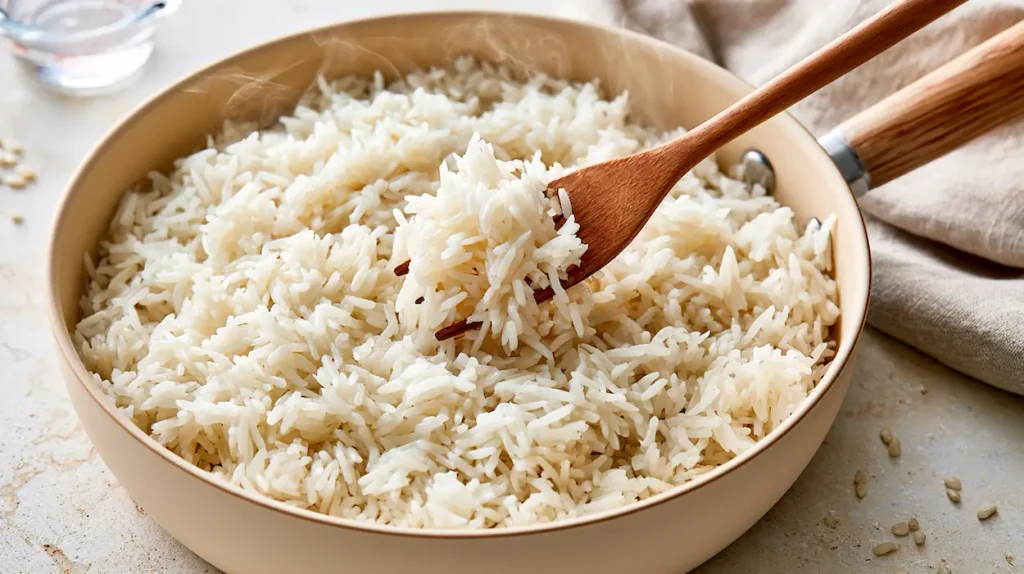
Leave the rice covered for about ten minutes. Resting allows moisture to move more evenly through the pot and lets the grains firm slightly. Then open the lid and fluff gently with a fork, lifting from the bottom without mashing.
Why rice becomes mushy in casseroles and skillets
Rice in a casserole shares liquid with meat, vegetables, soup, cheese, and sauce. The final texture depends on the type of rice, whether it begins raw or cooked, how tightly the dish is covered, and how much moisture the other ingredients release.
Use the rice named in the recipe. If it calls for uncooked long-grain rice, cooked rice or instant rice will absorb differently. Thaw and drain frozen vegetables unless the recipe was designed for them. Measure broth, condensed soup, milk, salsa, and canned tomato liquid instead of adding them by eye.
For a practical baked example, review easy chicken burrito casserole. For a skillet meal with tortillas rather than rice, chicken enchilada skillet shows how a short resting period helps a saucy dinner settle before serving.
Koukie’s Little Touch
I add a small strip of lemon peel or a lightly crushed garlic clove to the cooking liquid, then remove it before fluffing. It perfumes plain rice gently without adding extra liquid, and it makes a simple side feel more connected to the rest of dinner.
Helpful Tips
- Measure the rice and liquid instead of estimating.
- Use the exact rice variety requested by the recipe.
- Keep the lid closed while the rice simmers.
- Stir once at the beginning, then leave the grains undisturbed.
- Rest the covered pot off the heat before fluffing.
- Count broth, tomatoes, coconut milk, and vegetable juices as liquid.
Can mushy rice be used for fried rice?
Fried rice works best with cooked rice that is firm, cool, and relatively dry. Slightly soft rice can improve after it is spread out and chilled, but very wet or broken rice will clump in the skillet. If you want to try, cool the rice promptly in a shallow layer, refrigerate it, and use only once it is cold and dry enough to separate.
Do not leave cooked rice on the counter for extended cooling. Divide it into shallow containers and refrigerate promptly. Reheat leftovers thoroughly and only prepare the amount you plan to serve.
Frequently asked questions
Can I fix mushy rice with bread?
Placing bread over hot rice may absorb a little surface condensation, but it cannot remove water already absorbed inside the grains. A clean towel under the lid or spreading the rice in a thin layer is more direct and easier to control.
Does rinsing rice prevent it from becoming mushy?
Rinsing can remove loose surface starch and reduce gumminess, but it cannot correct too much liquid or overcooking. Drain rinsed rice thoroughly and still use the proper ratio and cooking time.
Why is my rice both mushy and crunchy?
The heat or moisture was probably uneven. A hard boil may soften the bottom while the top remains underhydrated, and a loose lid can let steam escape. Use a heavy pot, a tight lid, low heat, and an even layer of rice.
Can I put mushy rice in the oven to dry it?
A brief period spread on a sheet pan in a low oven can evaporate surface moisture, but it can also dry the edges while the centers remain soft. Start by spreading the rice at room temperature for a few minutes; use the oven only if the grains are intact and closely monitored.
Why does jasmine rice become mushy?
Jasmine rice is tender and can become very soft when given the same water ratio as some other long-grain varieties. Follow the package ratio, drain well after rinsing, simmer gently, and rest off the heat before fluffing.
How do I keep rice from getting mushy in soup?
Cook the rice separately and add it to individual bowls, or add raw rice only when the soup recipe accounts for its absorption and cooking time. Rice left in broth continues to absorb liquid during storage, so separate components keep a better texture.
The simple formula for tender, separate rice
Use the right rice, measure the liquid, simmer gently with the lid closed, stop at the recommended time, and rest before fluffing. In casseroles and one-pan meals, include every moisture source in the calculation and avoid casual substitutions. If a batch is already too soft, remove excess steam quickly and choose a new use when the grains are beyond repair.
For more practical solutions to everyday kitchen problems, explore the Cooking Q&A collection.