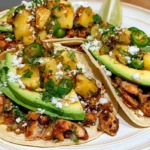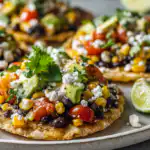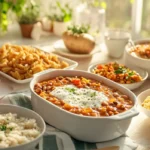
Chicken enchilada skillet brings shredded chicken, black beans, soft corn tortillas and melted cheese together in one pan. It has the saucy comfort of enchiladas without rolling individual tortillas or heating the oven. Start with cooked chicken, and dinner takes about 30 minutes.
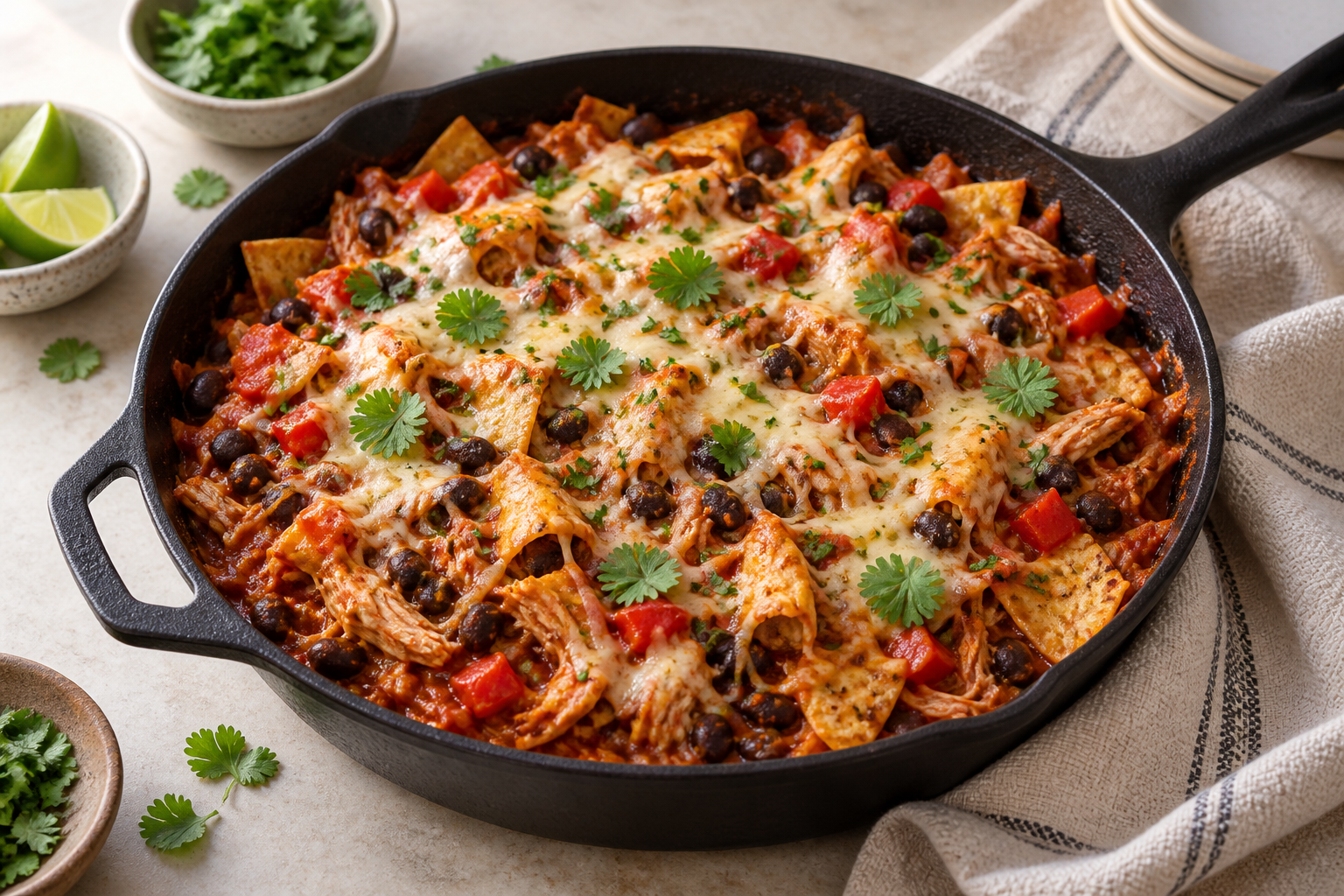
A practical dinner for leftover chicken
This skillet uses two cups of cooked chicken and a can of beans to make four generous portions. The tortillas soften directly in the sauce, giving the dish a spoonable texture with pieces you can still recognize. It is a skillet meal rather than a casserole you cut into tidy squares.
If you prefer a baked version for another night, our easy chicken burrito casserole is a useful next recipe. Here, the lid melts the cheese right on the stovetop.
What you need
- Cooked shredded chicken: rotisserie chicken or plain cooked chicken works. Remove bones and skin and shred into bite-size pieces.
- Black beans: drain and rinse a 15-ounce can. Pinto beans can replace them in the same quantity.
- Red enchilada sauce: use two cups of a brand you enjoy. Mild sauce gives you control over the heat; add hot sauce at the table.
- Corn tortillas: cut six small tortillas into roughly 1-inch pieces. They absorb sauce while keeping a little corn flavor and texture.
- Onion, bell pepper and garlic: these build a fresh base around the convenient pantry ingredients.
- Monterey Jack: melts smoothly under a lid. A mild cheddar and Jack blend also works.
Taste the sauce before starting. Some brands are salty, spicy or noticeably thicker than others. The recipe includes water to loosen the pan, and extra salt is usually unnecessary until you taste the finished dish.
Choosing Enchilada Sauce and Tortillas for a Stovetop Skillet
The sauce does much of the seasoning in this recipe, so choosing it deserves more attention than choosing an extra garnish. A red enchilada sauce should taste pleasant on its own before it goes into the pan. Look at the heat level and ingredients on the label, especially when cooking for people who prefer mild food. A very spicy sauce becomes harder to balance once the chicken and tortillas have absorbed it. Starting mild and offering hot sauce separately lets everyone adjust their own serving.
Check the consistency as you measure the sauce. Some canned versions pour almost like broth, while others coat a spoon. Both can work, but they behave differently during the brief simmer. Use the recipe’s measured water first, then judge the filling before the tortillas go in. It should be loose enough to move easily around the chicken and beans. It should not look like a dry taco filling, because the tortilla pieces still need moisture to soften.
Use small corn tortillas and pay attention to their thickness. A thin, very flexible tortilla can soften quickly; a thicker one may hold distinct edges longer. Cutting them into similar pieces matters more than making perfectly shaped squares. Separate pieces that stick together before adding them, so sauce can reach both sides. Do not replace them with a large pile of tortilla chips and expect the same result: chips bring extra salt and oil, and their texture changes differently in the sauce.
If the tortillas you have are better suited to folding or crisping, choose a meal built for that texture. Our guide to ground beef and tortilla dinners compares tacos, quesadillas, burritos and layered casseroles. It is useful when planning another dinner with the rest of a tortilla package rather than forcing every tortilla into the same preparation.
A Practical Prep Order for a 30-Minute Chicken Dinner
The short cooking time assumes that the chicken is already cooked and ready to shred. Before switching on the burner, check that you have a skillet deep enough for the filling and a lid that fits. Set out the sauce and water, rinse the beans, and cut the tortillas. Having these ingredients ready prevents the onion and garlic from sitting over heat while you search for a can opener or measure the sauce.
Prepare ingredients in the order you will need them. Dice the onion and pepper first, mince the garlic next, then shred the chicken into pieces that fit comfortably on a spoon. Large chunks make it harder to distribute the chicken among the beans and tortillas. Measure the cheese separately instead of leaving the bag beside the stove, where it is easy to add more than intended. Keep lime, cilantro and any chilled toppings for the final serving step.
During cooking, use the appearance of the food alongside the clock. The vegetables should soften before the garlic goes in. The sauce should bubble gently around the filling before you fold in the tortillas. Once cheese covers the surface, avoid repeatedly stirring through it; use the lid and low heat to melt it. Turning the heat up to save a minute can scorch the bottom while leaving the top unevenly heated.
Plan side dishes around that sequence. A raw cabbage salad can be prepared before the pan goes on, while a warm side needs its own cooking window. If you are roasting vegetables, read the frozen broccoli roasting guide first and start the oven accordingly. The skillet is best assembled near serving time, so finish any longer side preparation before adding the tortillas rather than keeping the completed pan bubbling while you wait.
How to make a chicken enchilada skillet
Soften the vegetables first
Use a deep 12-inch skillet with a lid. Cook the diced onion and pepper in oil until softened, then stir in garlic and cumin briefly. Keep the garlic moving so it does not turn bitter.
Heat the filling before adding tortillas
Stir in the chicken, beans, sauce and water. Let the mixture bubble gently and heat through. Starting with a hot filling means the tortilla pieces need only a few minutes in the pan, which helps them keep their shape.
Fold gently and melt the cheese
Add the tortillas and fold rather than vigorously stirring. Once softened, check that the center of the mixture reaches 165°F (74°C). Scatter cheese over the top, reduce the heat and cover until melted. Cilantro and lime wedges add a fresh finish.
How to avoid mushy tortillas
Add them near the end, not with the vegetables. Keep the simmer gentle and serve when they are just softened. Thin tortillas can break down faster than thick ones, so check early. If the skillet has been sitting, expect a softer texture as the pieces continue absorbing sauce.
For a dinner with crisp tortillas instead, try smashburger quesadillas. Their texture comes from direct contact with the hot pan, while these enchilada pieces deliberately soften in sauce.
How to Fix an Enchilada Skillet That Is Too Thick or Watery
Check the filling at two points: before adding tortillas and just before covering it with cheese. Before the tortillas go in, you want some visible sauce between the chicken and beans. After the tortillas soften, the mixture should be spoonable and moist. A little loose sauce is expected; this is not meant to set into firm slices. Judging it as though it were a baked casserole can lead to unnecessary cooking and overly soft tortillas.
If the filling is very watery before the tortilla step, simmer it gently with the lid off for a short time and reassess. Stir along the bottom so the chicken does not stick. Draining beans thoroughly and cooking moisture out of added vegetables helps prevent this problem in the first place. The same ingredient checks appear in our guide to preventing watery casseroles, although this stovetop dish needs its own shorter cooking process.
If the pan becomes too thick after adding tortillas, reduce the heat and fold in a small splash of water. Add a little at a time, since it is easier to loosen the filling gradually than to remove excess liquid later. Do not keep adding dry tortilla pieces as a thickener: you can end up with a dense mass instead of recognizable pieces in sauce. Likewise, sprinkling dry flour directly into the finished skillet can create lumps and is unnecessary for this recipe.
If the bottom starts catching, stop scraping aggressively. Lower the heat and check whether the pan needs a little more liquid. If a layer has actually burned, transfer the unburned food gently to another pan without scraping the scorched part into it. Finally, taste a cooled spoonful before correcting seasoning. Lime can brighten a flat-tasting portion, but it will not remove excess salt; avoid assuming that every sauce problem can be solved by adding more cheese or seasoning.
Make it fit your fridge
- No chicken: use a second drained can of beans. Add a splash more water if the mixture becomes thick.
- More vegetables: add a small diced zucchini with the pepper and cook off its moisture before adding sauce.
- Gluten-free version: check that both the corn tortillas and enchilada sauce are labeled gluten-free.
- Dairy-free version: omit the cheese or use a melting alternative you already like. Add avocado at serving time.
- Extra heat: use a little chopped jalapeño with the onion or a few drops of hot sauce at the table.
Serving ideas
The chicken, beans and tortillas make this a full meal. A crunchy cabbage salad or sliced cucumber adds contrast. If you want a warm vegetable, pair it with oven-roasted frozen broccoli. Browse our quick dinner recipes for more meals built around everyday ingredients.
Turn the Skillet into a Flexible Family Dinner
Use toppings to create different plates from one pan rather than changing the entire recipe for each person. Set out a small selection with contrasting textures: shredded cabbage for crunch, avocado for creaminess, and lime wedges for brightness. Choose two or three toppings you already have instead of buying a long list. The filling already contains sauce, beans, chicken and cheese, so a simple finish often works better than adding several rich toppings together.
For diners who want less heat, keep jalapeños and hot sauce out of the shared pan and offer them at the table. A mild sauce is the best starting point; a spoonful of yogurt or sour cream may soften the sensation of heat in a serving but cannot turn a very spicy base into a mild one. Serve chilled toppings separately so their texture stays fresh and any remaining skillet portions can be reheated without lettuce or avocado mixed through them.
Think about the rest of the week when shopping. A package of tortillas can support more than one style of dinner, while beans, peppers and cheese also fit many simple skillet meals. For a different base on another night, bookmark the one-pot ground beef and rice skillet. Follow that recipe’s rice and liquid measurements rather than adding uncooked rice to this enchilada pan; the two dishes use different cooking methods.
If you want more than four portions, use a second pan or prepare another batch instead of crowding a shallow skillet. Extra depth makes folding awkward and can leave the center heating more slowly than the edges. Keep each batch’s sauce and tortilla proportions consistent, and add the tortillas shortly before serving. This approach also lets you finish one pan with cheese and serve another without it when that suits your table, while keeping the main cooking process straightforward.
Koukie’s Little Touch
I reserve a small handful of cheese for the very end, then cover the skillet for a minute on low heat. A squeeze of lime and fresh cilantro added after uncovering give the rich enchilada sauce a fresher finish.
Helpful Tips
- Use fully cooked chicken so the skillet stays within the 30-minute timing.
- Cut the corn tortillas into similar-size pieces for even softening.
- Drain and rinse the black beans before adding them.
- Let the skillet rest for 5 minutes so the sauce settles before serving.
Make-ahead, storage and reheating
For the best texture, prepare the filling ahead and add tortillas and cheese only when reheating to serve. Refrigerate leftovers promptly in shallow containers. Use within three days, counting from when the chicken was originally cooked; making a new dish does not restart its storage clock. Reheat to 165°F (74°C), adding water if needed. These practices follow USDA leftover guidance.
The filling can be frozen separately from the tortillas and cheese for up to two months for best quality. Thaw in the refrigerator. A fully assembled frozen portion remains convenient, but its tortillas will be much softer after reheating.
Frequently asked questions
Can I use raw chicken?
This timing is for cooked chicken. Cook raw chicken separately to 165°F (74°C), then shred and measure it before starting the skillet.
Can flour tortillas replace corn tortillas?
They can, but they soften faster and may become gummy. Use corn tortillas for the texture described here.
Do I need an oven-safe pan?
No. The recipe finishes covered on the stovetop. The cheese melts without broiling.
Chicken and Black Bean Enchilada Skillet Recipe
Chicken and Black Bean Enchilada Skillet
Ingredients
Method
- Heat olive oil in a deep 12-inch skillet over medium heat. Add onion and bell pepper; cook 5-6 minutes, stirring, until softened.
- Stir in garlic and cumin for 30 seconds. Add cooked chicken, drained beans, enchilada sauce and water. Bring to a gentle simmer and cook 4-5 minutes, stirring, until hot.
- Fold in tortilla pieces. Simmer gently for 3-4 minutes until softened but still recognizable. Add water a tablespoon at a time if the mixture looks dry.
- Check the center reaches 165°F (74°C). Sprinkle cheese on top, cover and turn the heat to low for 2-3 minutes, until melted. Finish with optional cilantro and lime wedges. Serve immediately.