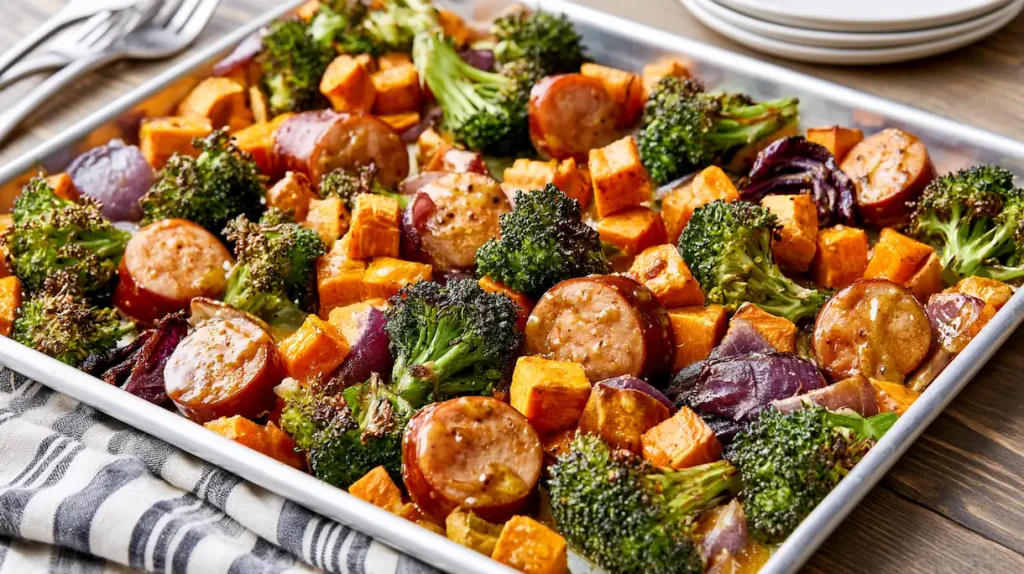
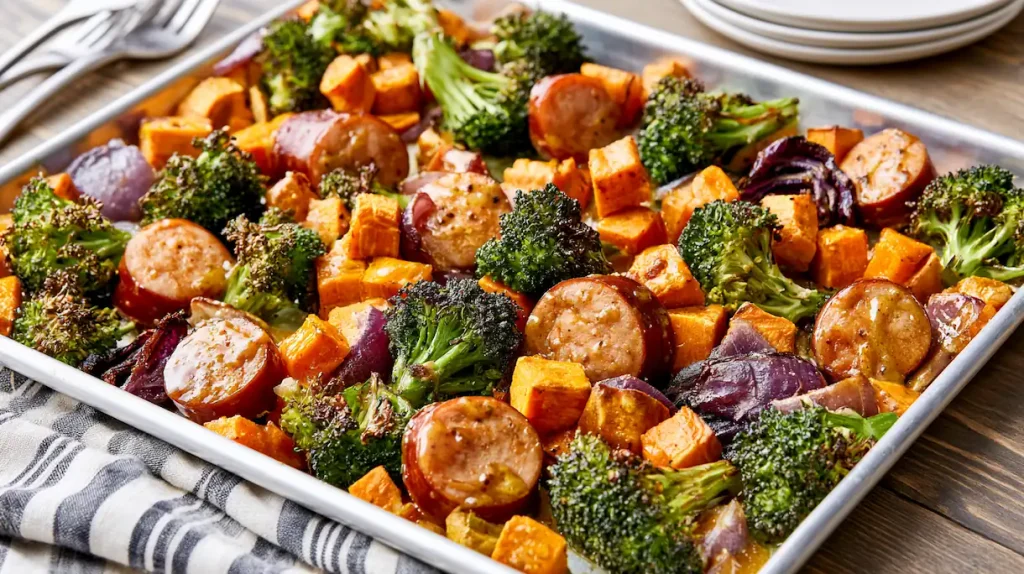
This sheet pan sausage, sweet potatoes and broccoli is an easy dinner for evenings when I want real food with almost no cleanup. The vegetables roast until caramelized while the sausage becomes golden around the edges.
Everything cooks on one pan with a simple smoky honey-mustard seasoning. For another hands-off meal, see my one-pan chicken and green beans.
Why You’ll Love This Dinner
- About 10 minutes of preparation
- One pan to wash
- Colorful, family-friendly ingredients
- Easy to prepare ahead
Ingredients
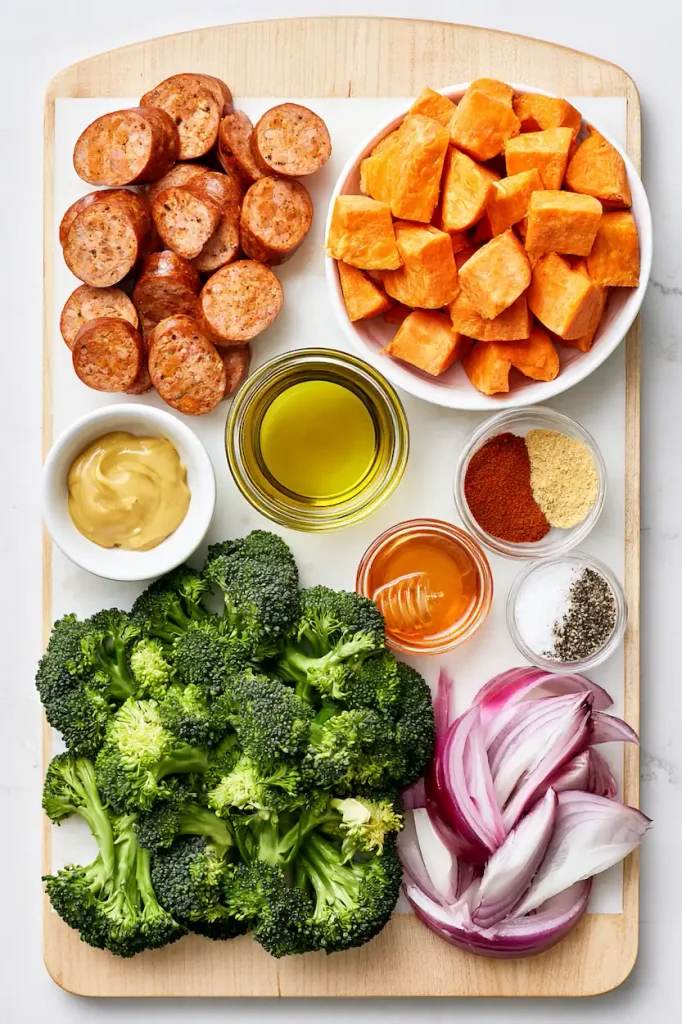
- 14 ounces fully cooked chicken or turkey sausage, sliced
- 2 medium sweet potatoes, cut into 3/4-inch cubes
- 4 cups broccoli florets
- 1 small red onion, cut into wedges
- 3 tablespoons olive oil
- 1 tablespoon Dijon mustard
- 2 teaspoons honey
- 1 teaspoon smoked paprika
- 1/2 teaspoon garlic powder
- Salt and black pepper
Choose the Right Sausage and Cut the Vegetables for Even Roasting
This recipe is built around fully cooked chicken or turkey sausage. Check the package for that wording before starting, because a raw sausage is not a timing-equivalent substitute. Fully cooked sausage needs to be heated according to its package instructions while the vegetables roast; raw sausage needs a cooking method and doneness checks appropriate to that product. Keeping the specified sausage makes this particular dinner much easier to coordinate.
Choose a flavor that works with the smoky mustard seasoning. A fairly simple garlic, herb or smoked sausage allows the sweet potatoes and Dijon to remain noticeable. If your sausage is already sweet or strongly seasoned, taste a cooked piece according to the package directions and be conservative with extra salt. Different brands can bring very different salt levels, so the same final sprinkle is not right for every pan.
Cut sausage slices to a similar thickness and avoid shaving them paper-thin. Very thin edges may dry before the vegetables are ready, while very thick pieces have less cut surface available for browning. A slight diagonal cut is optional; consistency matters more than appearance. Keep the slices separate rather than stacked when they go onto the tray, so they can heat evenly and develop color where they touch the metal.
For the sweet potatoes, aim for the stated three-quarter-inch cubes. Start by making a stable flat surface before cutting, then work carefully into slabs, sticks and cubes. A mixture of tiny chips and large chunks is harder to manage: the chips can darken while the larger pieces still feel firm. If you leave the peel on, scrub the potatoes well and trim away damaged areas. Peel them if you prefer a more uniform texture.
Cut the broccoli into florets that are reasonably similar in size and dry them after washing. Keep some stem attached so the crowns hold together, but avoid leaving a few thick, long stalks among otherwise small pieces. Red onion wedges should also be thick enough to remain recognizable during roasting. You do not need identical geometric shapes; the goal is a tray without extreme differences in size.
If frozen broccoli is what you have, read the guide to roasting frozen broccoli for realistic texture expectations and moisture control. Its separate side-dish method uses its own temperature and timing. Do not combine the two recipes’ instructions indiscriminately; check the frozen vegetable package and expect more moisture than you would get from well-dried fresh florets.
How to Make It
1. Start the sweet potatoes
Heat the oven to 425°F. Toss the sweet potatoes and onion with half the oil, paprika, garlic powder, salt, and pepper. Roast for 15 minutes.
2. Add the remaining ingredients
Whisk the remaining oil with Dijon and honey. Add the sausage and broccoli to the pan, pour over the mixture, and toss carefully.
3. Finish roasting
Spread everything into one layer and roast for 15 to 20 minutes more. The sweet potatoes should be tender and the broccoli browned at the edges.
Why Sweet Potatoes Need a Head Start on the Sheet Pan
The staged cooking method is the key to this dinner. Dense sweet potato cubes need more time to soften than small broccoli crowns, and the fully cooked sausage does not need the entire vegetable roasting time. Putting everything into the oven together can give you browned broccoli and dry sausage while the sweet potatoes are still firm. The first fifteen minutes give the slower ingredient a head start before the rest joins it.
Preheat fully before loading the sweet potatoes and onion. Spread them over the tray with some room around the pieces, and place a broad cut side against the metal where possible. Tossing with oil should leave a light coating rather than a pool in one corner. Check that seasonings are distributed through the vegetables, especially if the oil and spices were added separately instead of mixed in a bowl.
While the first stage cooks, whisk the remaining oil, mustard and honey in a small bowl. Get the sausage and broccoli ready on the counter only as needed for assembly, following the sausage package’s handling directions. Prepare oven mitts and a heatproof place for the hot tray. Adding the second set of ingredients is much easier when everything is measured and you are not trying to slice sausage beside a hot sheet pan.
When you add the broccoli and sausage, toss carefully and then deliberately spread the food back out. A quick toss often leaves a mound in the middle, even if the pan looked spacious before. Move a few sweet potato cubes into the gaps, lay the sausage slices flat and give the broccoli crowns their own space. If the final volume is too much for one tray, divide it between two instead of pressing everything into a deep layer.
At the end of roasting, check several of the largest sweet potato pieces with a fork. They should be tender through the middle. Inspect the broccoli and sausage separately rather than deciding the whole pan is ready because one corner is browned. If one component finishes early, remove those pieces carefully and let the slower ones continue. Oven performance and the exact size of the vegetables can change the finishing time.
The same attention to size and cut surfaces is useful with rosemary roasted baby potatoes, but follow that recipe’s measurements and timing on another night. A roasting method transfers best as a principle—consistent pieces, enough space and a doneness check—rather than as one fixed number of minutes for every vegetable.
Koukie’s Little Touch
I finish the pan with a squeeze of lemon and a small handful of chopped parsley. That fresh touch balances the sweetness of the potatoes and honey.
Tips for Better Browning
- Cut the sweet potatoes into small, even cubes.
- Give the ingredients space; use two pans if necessary.
- Dry washed broccoli before roasting.
- Turn on the broiler for one or two minutes at the end if you want crispier edges.
Balance the Honey-Mustard Coating and Troubleshoot Browning
The honey-mustard mixture is a light coating, not a large quantity of sauce. Dijon adds a tangy note, honey balances that sharpness and the remaining oil helps distribute both across the sausage and broccoli. Whisk until the mixture looks uniform before pouring it on. Otherwise, one part of the tray can receive most of the mustard while another gets a concentrated patch of honey.
Keep the recipe’s modest amount of honey for the first batch. More sweetness is not automatically better, and extra honey on a hot tray can darken faster than the vegetables cook. You can offer an additional dressing at the table if someone wants more sauce. Adding it after roasting gives you more control over the flavor and avoids coating every floret with enough liquid to soften the browned edges.
If the pan looks pale and wet, check the spacing first. Broccoli carries surface water when it has not been dried, and crowded vegetables release steam into the spaces between them. A deeper heap can stay soft even when the oven setting is correct. Carefully spread the ingredients out or divide the batch, then give the surface time to dry. Pouring in more oil will not remove that excess moisture.
If the edges are darkening while sweet potato centers are still firm, look at cube size and placement. Very large cubes may need longer than the stated range, while small broccoli pieces near the edge of the pan can finish early. Remove finished pieces rather than burning them while waiting for the potatoes. If your oven browns one side more strongly, rotate the tray carefully during cooking and watch what changes.
Broiling is optional, not a repair for undercooked sweet potatoes. Only consider it once the food is otherwise cooked and your pan or liner is rated for that use. Stay beside the oven and watch continuously, because the honey coating and broccoli tips can go from browned to burnt quickly. Skip the broiler entirely when you are happy with the color or when your cookware is not suitable.
For the final seasoning, taste the combined bite of sausage, potato and broccoli before reaching for more salt. A squeeze of lemon or fresh parsley can add contrast without making the coating heavier. If you enjoy a sauce-rich dinner but want to avoid managing oven browning, the chicken enchilada skillet offers a different stovetop approach; this sheet-pan meal is intended to keep its roasted texture.
Easy Variations
Use Brussels sprouts, cauliflower, bell peppers, or zucchini depending on the season. Maple syrup can replace honey, and Italian seasoning can replace smoked paprika.
Storage and Meal Prep
Store leftovers in the refrigerator for up to 4 days. Reheat on a sheet pan at 375°F for the best texture. You can chop the vegetables and mix the sauce one day ahead, keeping them refrigerated separately.
What to Serve With It
This is a complete light dinner on its own. Add rice, quinoa, warm bread, or a simple salad for a larger meal. These rosemary roasted baby potatoes are another useful side for your weekly menu.
Plan Portions, Pack Lunches and Build a Complete Dinner
Use the four servings as a starting point and adjust the rest of the meal to the appetites at your table. The tray includes sausage, sweet potatoes and broccoli, so some people will want only a fresh salad alongside it. Others may prefer rice, quinoa or bread. Add a side before automatically doubling the tray, especially if the oven only has enough space for one well-spread batch.
For a bigger batch, multiply the ingredients and also increase the cooking surface. Two appropriately sized trays are easier to manage than one overflowing tray. When using two oven racks, allow room for air to circulate and check whether the upper and lower trays are cooking at different rates. Rotate their positions carefully if needed. The extra cold food can affect timing, so use vegetable tenderness and the sausage package’s heating requirements rather than assuming the original schedule stays exact.
For lunches, portion the finished components so each container gets a fair share of vegetables and sausage. Keep any fresh parsley, lemon wedges or dressing separate until serving when practical. A reheated lunch will usually have softer broccoli than the first dinner, which is normal. Pairing it with a grain bowl can make that texture feel intentional instead of trying to recreate every crisp edge from the original tray.
When preparing ingredients a day ahead, store the chopped vegetables and mixed coating separately as noted above. This keeps the wet mustard mixture from sitting on the broccoli before roasting and lets you spread the vegetables easily when it is time to cook. Label the containers so the two cooking stages remain clear. Keep the sweet potato and onion mixture ready for the first stage and the broccoli and sausage ready for the second.
A simple planning approach is to choose the main dish, decide whether it needs a side, and check which component takes longest. Start rice or another longer side early enough that the roasted vegetables do not have to wait under a cover. Prepare cold accompaniments while the sweet potatoes get their head start, then finish the table while the full tray roasts.
For another use for broccoli later in the week, the chicken and broccoli dinner ideas guide compares rice bowls, pasta bakes and skillet meals. Choose a different format rather than forcing every leftover into another roasted tray. Following each dish’s own method gives you variety while still using familiar ingredients and keeping the weekly shopping list manageable.
Frequently Asked Questions
Can I use raw sausage?
Yes, but cooking time varies. Make sure poultry sausage reaches 165°F and pork or beef sausage reaches a safe temperature before serving.
Can I use frozen broccoli?
Yes. Roast it from frozen and leave extra space so moisture can escape.
Why are my vegetables soft?
A crowded pan traps steam. Spread the ingredients out and avoid adding too much sauce.
Final Thoughts
This colorful sheet pan dinner is simple, cozy, and easy to repeat with whatever vegetables you have. It is exactly the kind of practical evening meal I enjoy sharing on LunEat.
Sheet Pan Sausage with Sweet Potatoes and Broccoli
Ingredients
Equipment
Method
- Heat the oven to 425 F. Toss the sweet potatoes and red onion with half of the olive oil, smoked paprika, garlic powder, salt, and black pepper. Spread on a sheet pan and roast for 15 minutes.
- Whisk the remaining olive oil with the Dijon mustard and honey. Add the sliced sausage and broccoli to the sheet pan. Pour the honey-mustard mixture over everything and toss carefully to coat.
- Spread everything into a single layer and roast for 15 to 20 minutes more, until the sweet potatoes are tender, the sausage is golden around the edges, and the broccoli is browned. Finish with lemon juice and chopped parsley if desired.