
This one-pot ground beef and rice skillet is a cozy, practical dinner made with simple pantry ingredients. The rice cooks directly in the savory tomato broth, so every bite absorbs the flavor and there is only one pan to clean.
It is a useful recipe for busy evenings and easy to adjust with vegetables already in the refrigerator. If you are planning affordable meals, save my cheap dinner ideas too.
Why This Recipe Works
- Ready in about 35 minutes
- Uses inexpensive staples
- Freezer-friendly and good for meal prep
- Easy to customize
Ingredients
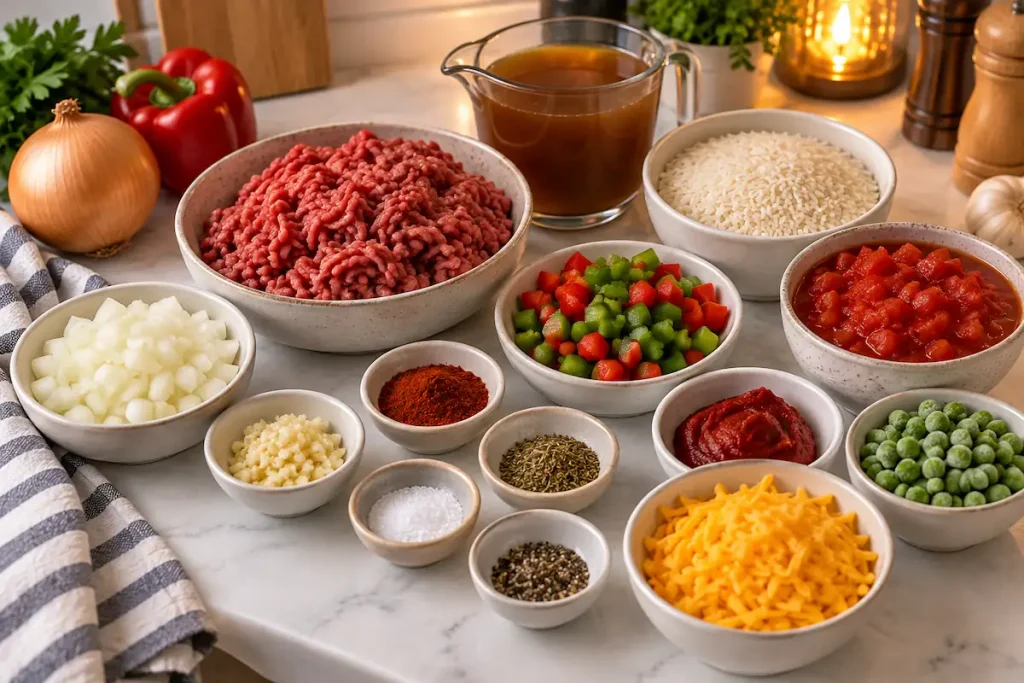
- 1 pound lean ground beef
- 1 small yellow onion, diced
- 1 bell pepper, diced
- 2 garlic cloves, minced
- 1 teaspoon smoked paprika
- 1 teaspoon Italian seasoning
- 1 cup uncooked long-grain white rice
- 1 can diced tomatoes, drained
- 2 cups low-sodium beef broth
- 1 tablespoon tomato paste
- 1 cup frozen peas or corn
- 1 cup shredded cheddar, optional
- Salt and black pepper
Choose the Right Rice, Broth and Tomatoes Before You Start
Use regular uncooked long-grain white rice for the method below. The rice is not just a side added to the beef; it cooks in the measured broth and helps determine the final texture of the entire skillet. Instant rice, microwave rice and brown rice are different products with different cooking requirements. A bag labeled “rice” is not enough information to assume it will behave the same way in this one-pan method.
Measure the dry rice with a level cup and the broth separately. Do not add an extra handful of rice to stretch the meal without considering how much liquid it needs. That small-looking addition can leave part of the pan dry before the grains soften. Conversely, reducing the rice while keeping all the broth can leave a much looser dish. Keep the base quantities unchanged for the first batch so you have a reliable result to compare with future adjustments.
The tomatoes are drained in this recipe. Tip them into a strainer and let the loose juice run off instead of pouring the entire can into the skillet. Tomato liquid varies by product, so adding it changes the recipe’s moisture balance. This does not mean tomato juice can never be used in a rice dish; it means this particular method already supplies its cooking liquid through the measured broth.
Low-sodium broth gives you more control over the finished seasoning. The beef, tomato paste and optional cheddar all contribute flavor, and the liquid becomes more concentrated as the rice cooks. Add salt thoughtfully at the beginning, then taste a cooked portion before making a final adjustment. If you choose a strongly seasoned broth, reduce the extra seasoning you would otherwise add by habit.
Read the vegetable choices as part of the same balance. A cup of peas or corn is different from a large quantity of watery zucchini or mushrooms. If you want to introduce vegetables that release a lot of liquid, cook off their excess moisture before they join the rice stage. Our guide to preventing watery casseroles explains why ingredient moisture and starch choice matter together, even though a covered skillet uses a different cooking method from an oven bake.
Finally, set out the lid before cooking. A deep skillet with a well-fitting lid helps keep the rice surrounded by the steam it needs. Discovering halfway through that the lid is too small can lead to extra evaporation and inconsistent cooking. A suitable pan is as important to repeating the recipe as measuring the ingredients.
How to Make Ground Beef and Rice
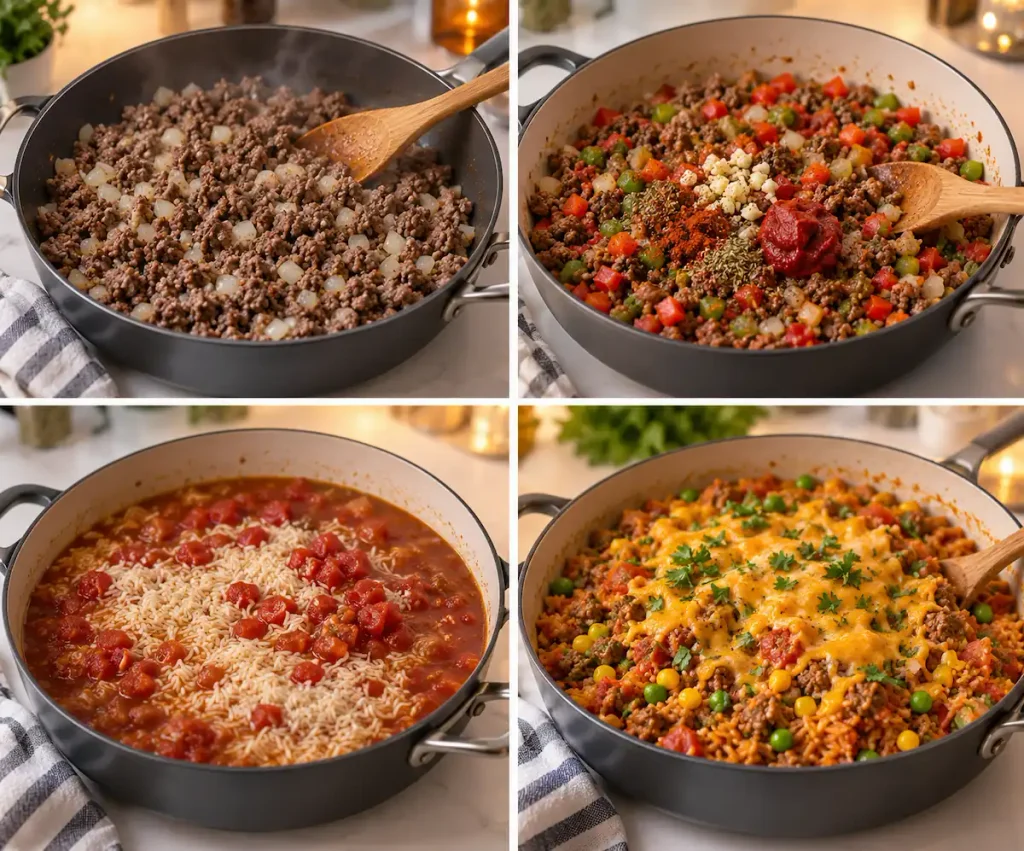
1. Brown the beef
Cook the beef and onion in a deep skillet over medium-high heat, breaking the meat into small pieces. Drain excess fat if needed. Ground beef should reach 160°F (71°C).
2. Add flavor
Stir in the bell pepper, garlic, paprika, Italian seasoning, tomato paste, salt, and pepper. Cook for 2 minutes.
3. Simmer the rice
Add the rice, tomatoes, and broth. Bring to a gentle boil, cover, reduce the heat, and simmer for 18 to 20 minutes. Avoid lifting the lid repeatedly.
4. Finish the skillet
Stir in the peas or corn. Add cheddar if using, cover for 3 minutes, then fluff the rice gently and serve.
Build Flavor Before the Rice Goes into the Pan
The browning stage is the best opportunity to develop the beef’s flavor without disturbing the rice later. Break the meat into small, fairly even crumbles as it cooks. Large clumps make the finished skillet harder to portion and can hide rice between dense pieces of beef. Use a broad spatula or wooden spoon to turn the meat and expose different surfaces to the pan rather than constantly stirring it in a wet mound.
Pay attention to liquid in the skillet before adding the remaining seasonings. Ground beef can release both water and fat. Let excess water cook away, and drain excess fat when needed as the main method describes. You want a savory base rather than a greasy pool under the rice. If the pan begins to look dry while the onion is still firm, lower the heat and keep the ingredients moving so the onion does not scorch.
Cut the bell pepper and onion small enough to distribute through the finished meal. A few very large pepper chunks may stay noticeably firmer than the rice, while finely diced pieces blend into each spoonful. Have the garlic, paprika, Italian seasoning and tomato paste ready before this stage. Garlic and spices need only their short cooking step; leaving them unattended while you measure broth can give the base a harsh or burnt note.
Stir the tomato paste through the beef and vegetables so it is not left as one thick lump. Its color can deepen slightly as it cooks, but it should not form a black crust. When you add the broth, gently loosen the browned bits that release easily from the bottom. Do not scrape a clearly burnt layer into the food. A flavorful browned base and a scorched base are not the same thing.
Once the rice, drained tomatoes and broth are in, distribute the mixture evenly before covering. Check that dry rice is not sitting in a pile above the liquid along one edge. Bring the pan to the stated gentle boil, then turn the heat down for the covered simmer. A fierce boil can drive off liquid too quickly, while barely warming the pan can slow the rice without achieving the intended cooking conditions.
For another quick meal that uses a ready-to-heat filling rather than dry rice, try the chicken enchilada skillet. Its tortillas enter near the end, whereas the rice here needs a measured covered cooking stage. Comparing the two helps explain why one-pan dinners are convenient but cannot all be cooked with the same sequence.
Koukie’s Little Touch
I add a spoonful of tomato paste and let it cook briefly before adding the broth. This small step gives the skillet a deeper, slow-cooked flavor even though dinner is ready quickly.
Helpful Tips
- Use regular long-grain white rice, not instant rice.
- Keep the pan covered while the rice cooks.
- Let the skillet rest for 5 minutes if the rice looks slightly wet.
- Add a little warm broth if the rice is still firm after the liquid is absorbed.
Fix Crunchy, Wet or Sticky Rice Without Overcorrecting
At the end of the stated simmer, taste a few grains from different parts of the skillet. Check the center as well as a spot near the edge. Rice that is tender around the outside but firm in the middle can point to uneven heat, uneven distribution or steam escaping from the lid. One spoonful is not always enough to judge a large pan.
If the rice is still firm and the pan is dry, add a small splash of warm broth or water, cover again and continue cooking gently. Check after a few minutes rather than immediately adding another large pour. The goal is to supply enough moisture for the remaining cooking, not turn the skillet into soup. Use plain water when the dish already tastes salty; extra broth may add seasoning you do not need.
If the rice is firm but there is still visible liquid, it may simply need more covered cooking time. Adding more liquid at that point can make the final dish wetter without solving the timing problem. Keep the heat gentle and confirm that the lid is sitting correctly. Repeatedly lifting it releases steam, so make your check purposeful and then give the pan time to work.
If the rice is tender but the mixture looks a little wet, follow the short resting suggestion before changing anything. Some remaining moisture can settle into the rice as it stands. If there is a substantial pool rather than a lightly moist finish, a brief uncovered period over gentle heat may help, but watch the bottom carefully and avoid vigorous stirring. You cannot reverse very soft, broken grains by cooking them longer.
Sticky rice can come from the rice variety, excess liquid or repeated stirring. Fold the finished mixture gently instead of beating it with a spoon. The aim is to distribute the peas and optional cheese while keeping as many grains intact as possible. If the bottom has scorched, move the unburned portion to a clean dish without scraping the dark layer into it.
Do not apply the same target texture to every one-pan starch dish. The creamy Tuscan chicken orzo recipe is designed for a softer, saucier pasta finish and uses its own liquid quantities. This rice skillet should remain moist, but its distinct grains are part of the intended result. Record any adjustment that worked with your pan so you can repeat it instead of making several large corrections next time.
Variations
Use ground turkey, chicken, or plant-based crumbles. Add black beans and taco seasoning for a Southwest version, or spinach and Parmesan for an Italian-style skillet.
Storage and Reheating
Refrigerate leftovers in an airtight container for up to 4 days. Reheat with a splash of broth or water. Freeze cooled portions for up to 2 months and thaw overnight in the refrigerator.
Serving Ideas
Serve with a green salad, steamed vegetables, avocado, or warm tortillas. For more ways to use the same main ingredient, explore ground beef and tortilla dinner ideas.
Make the Beef and Rice Skillet Fit Your Weekly Menu
Decide which variation you want before you begin, then keep the change coherent. For a Southwest direction, the black beans and taco seasoning mentioned above work naturally with the tomato base. Drain the beans so they do not introduce an unmeasured amount of liquid. For a gentler herb flavor, keep the Italian seasoning and offer Parmesan separately. Adding every possible variation at once can overwhelm the simple beef-and-rice combination.
If using a different ground protein, follow its own cooking requirements rather than treating the ground-beef temperature as universal. The recipe’s browning stage still gives you a chance to remove excess moisture and distribute the meat into small pieces. A plant-based crumble may absorb or release liquid differently depending on the brand, so read the package and avoid assuming all alternatives behave exactly like beef.
Choose a side that contrasts with the skillet instead of repeating its soft texture. A crisp cucumber salad, sliced vegetables or a small serving of oven-roasted frozen broccoli adds variety without another rich sauce. If roasting broccoli, begin the oven preparation early enough that the rice can finish and rest while the tray completes its cooking. Keep the skillet’s lid on during its simmer instead of interrupting it repeatedly to coordinate the side.
For lunches, portion the cooked dish into meal-size containers and follow the storage guidance below. Add fresh avocado, herbs or crunchy vegetables at serving time rather than mixing them into every portion before refrigeration. That keeps the fresh components more appealing and allows you to reheat only the rice-and-beef portion. Expect refrigerated rice to need a little added moisture when reheating; assess one portion before adding a large amount.
To serve a larger group, consider cooking two manageable batches rather than doubling everything in a shallow pan. A very deep, crowded mixture can heat unevenly, and the same lid may not sit properly once the pan is overfilled. Keep track of each batch’s rice and broth measurements separately. More portions require adequate pan capacity as well as more ingredients.
For the next dinner, use remaining peppers, cheese or beans in a different format. The ground beef and tortilla ideas guide offers tacos and quesadillas when you want a crisp or handheld meal. This creates variety from a similar shopping list without repeatedly reheating or reworking one large batch throughout the week.
Frequently Asked Questions
Can I use brown rice?
Brown rice needs more liquid and a longer cooking time, so the recipe must be adjusted.
Why is my rice crunchy?
The heat may have been too high or the pan may have lost steam. Add a little broth, cover, and cook gently for several more minutes.
Can I make it dairy-free?
Yes. Simply leave out the cheese; the tomato-seasoned rice remains flavorful.
Final Thoughts
This ground beef and rice skillet is warm, filling, and dependable. It turns everyday ingredients into a dinner that feels complete without making the evening complicated.