
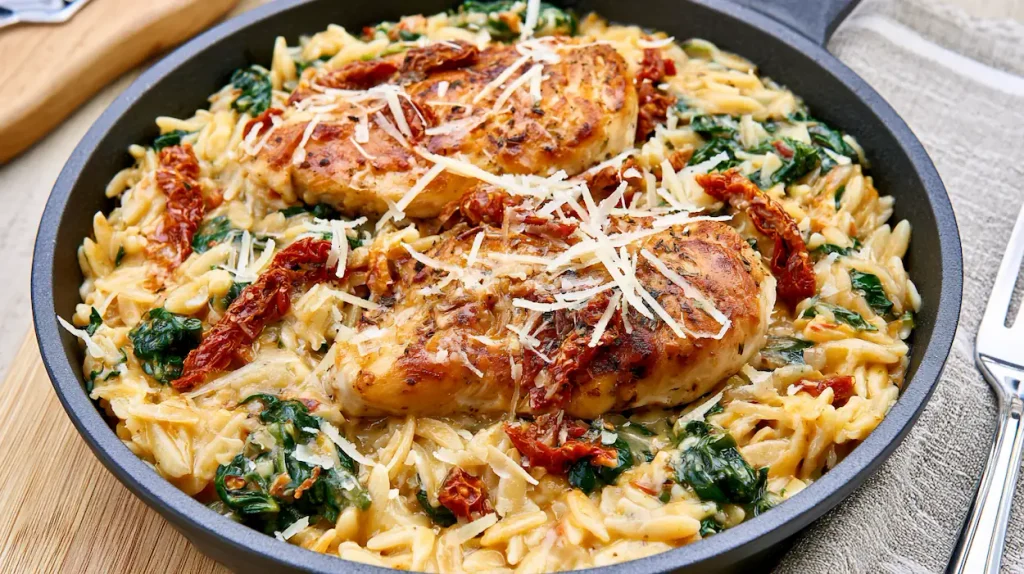
This creamy Tuscan chicken orzo is the kind of dinner I make when I want something warm and comforting without a sink full of dishes. Tender chicken, sun-dried tomatoes, spinach, and orzo cook together in one pan with a light creamy sauce.
It is simple enough for a busy weeknight but still feels special at the table. If you enjoy relaxed one-pan meals, you may also like my one-pan lemon chicken and potatoes.
Why This One-Pan Orzo Works
- Ready in about 35 minutes
- Uses one skillet
- Made with familiar grocery-store ingredients
- Easy to adapt with leftover vegetables
Ingredients
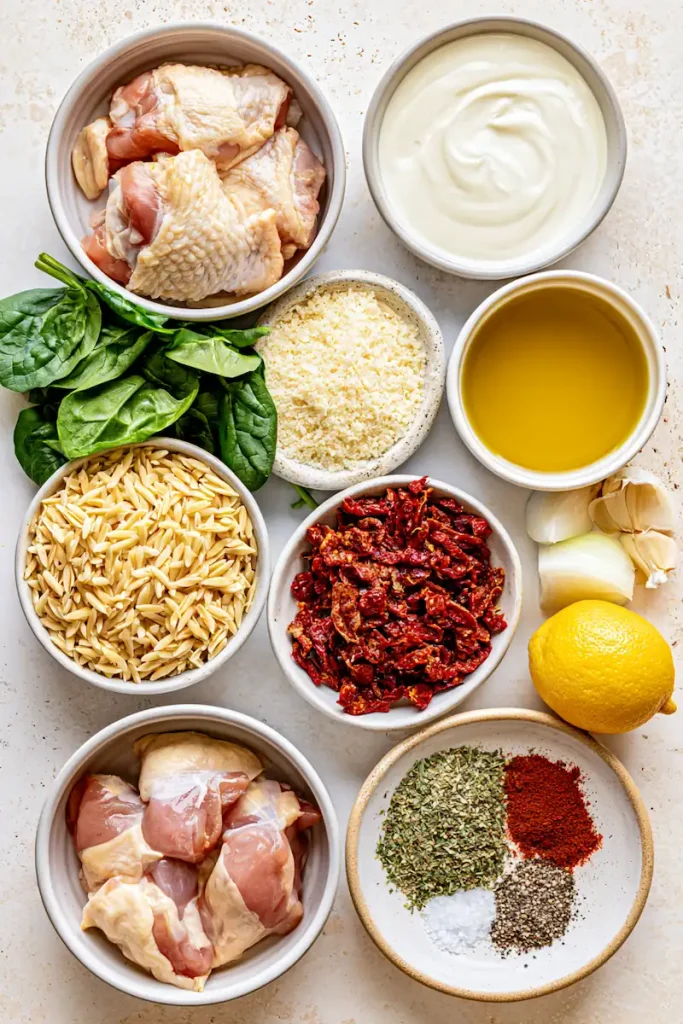
- 1 1/2 pounds boneless skinless chicken thighs, cut into pieces
- 1 tablespoon olive oil
- 1 small onion, diced
- 3 garlic cloves, minced
- 1 teaspoon Italian seasoning
- 1/2 teaspoon paprika
- 1 cup dry orzo
- 2 1/2 cups low-sodium chicken broth
- 1/2 cup chopped sun-dried tomatoes
- 1/2 cup heavy cream or half-and-half
- 2 cups baby spinach
- 1/3 cup grated Parmesan
- Salt and black pepper
Choose Orzo, Chicken and Sun-Dried Tomatoes for This One-Pan Method
Orzo looks similar to rice, but it is pasta. That distinction matters because this recipe relies on the way small pasta shapes cook and release starch into broth. Measure the orzo dry, as listed in the ingredients, rather than substituting a cup of already cooked pasta. Cooked orzo has already absorbed water and would leave the recipe’s broth balance very different.
Use the package cooking time as useful background while following this recipe’s method and checking tenderness in the pan. Different brands can vary in size and thickness. The orzo should become tender with a little structure left, not dissolve into a thick paste. Whole-wheat or gluten-free versions may behave differently and should not be treated as automatic timing-equivalent substitutions. If making one of those changes, expect to adjust the method according to the product.
Chicken thighs are specified because they suit this type of skillet dinner. Cut them into pieces that are close in size so the cooking is more even. Very small pieces can dry while larger chunks still need time. If you choose chicken breast from the variation options, pay particular attention to size and the doneness check rather than assuming the browning time alone tells you the meat is fully cooked.
Sun-dried tomatoes are sold dry and packed in oil. Read the package and prepare them accordingly. Drain oil-packed tomatoes before chopping, unless the recipe specifically calls for their oil. Dry-packed pieces can be firmer; follow any softening directions provided with them. Chop either style small enough that a single forkful gets a little tomato flavor rather than one large, chewy strip.
Grate the Parmesan before heating the pan, wash and dry the spinach, and measure the cream separately from the broth. These small preparations matter because the final stage moves quickly. You do not want tender orzo sitting over heat while you search for the cheese grater. Keep the broth for cooking the pasta and the cream for finishing it; they have different jobs in the recipe.
If you intended to use rice, choose a rice-specific meal such as the ground beef and rice skillet instead of borrowing this orzo liquid ratio. The principle of cooking a starch in one pan is shared, but the covered rice method and this frequently stirred pasta method are not interchangeable.
How to Make Creamy Tuscan Chicken Orzo
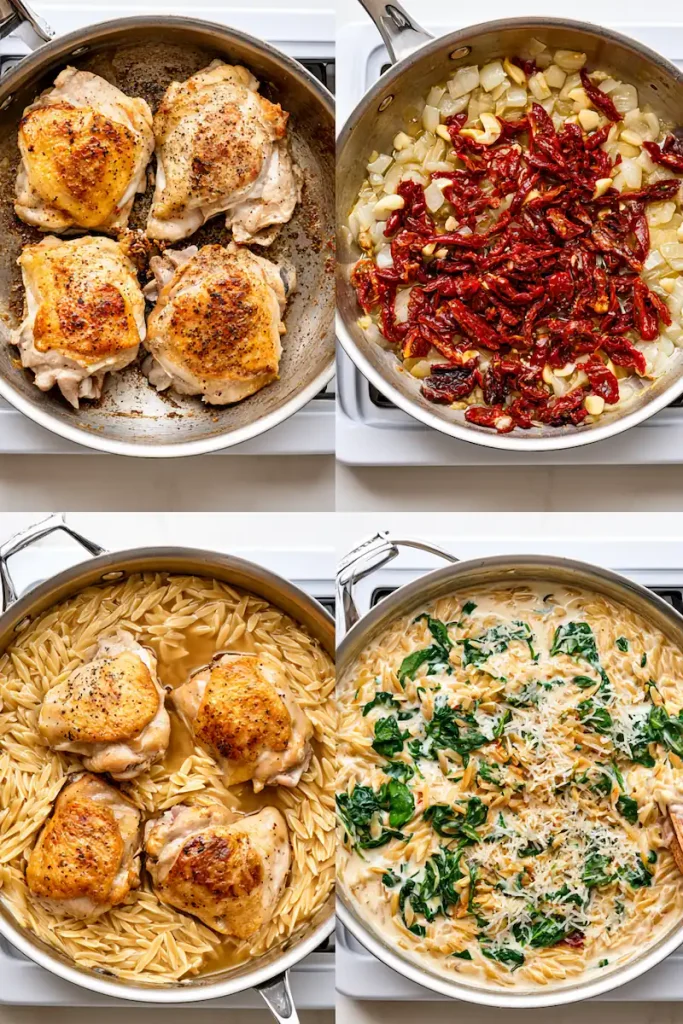
1. Brown the chicken
Heat the olive oil in a large deep skillet. Season the chicken with salt, pepper, paprika, and Italian seasoning. Cook for 5 to 7 minutes, stirring occasionally, until lightly golden. Transfer it to a plate.
2. Build the flavor
Add the onion and cook for 3 minutes. Stir in the garlic and sun-dried tomatoes for 30 seconds.
3. Cook the orzo
Stir in the orzo and broth. Bring to a gentle simmer, then cook uncovered for 9 to 11 minutes, stirring often so the pasta does not stick.
4. Finish the sauce
Return the chicken to the pan. Stir in the cream, spinach, and Parmesan. Cook until the spinach wilts and the chicken reaches 165°F (74°C). Rest for 3 minutes before serving.
Control the Simmer So the Orzo Stays Creamy, Not Sticky
Once the broth is added, maintain a gentle simmer rather than a forceful boil. The orzo needs time to cook while the liquid gradually reduces. If the pan bubbles too aggressively, the liquid can disappear before the pasta is tender. If it barely heats at all, the stated timing will not reflect what is happening in your skillet. Look for steady gentle activity and adjust the burner when needed.
Stir regularly across the bottom and into the corners, where small pasta shapes can collect. A wide wooden spoon or spatula helps lift them without mashing them. This differs from the covered rice method, where frequent stirring is generally not part of the process. Here, stirring helps keep the orzo moving through the liquid and prevents a dense layer from catching underneath.
Check the pasta near the end of the suggested cooking window. Taste a few pieces rather than judging by how thick the liquid looks. A starchy broth can appear creamy even when the pasta still has a firm center. If the skillet is drying out before the orzo is ready, add a little warm broth and continue gently. Make small corrections so you can see their effect before adding more.
If the orzo is tender but the pan looks slightly loose, remember that the finishing ingredients and short rest will change the texture again. Avoid reducing it to a very thick mass before returning the chicken. The finished dish should settle softly onto a plate, with enough sauce to coat the pasta. It will continue to thicken while standing, so leave room for that change instead of aiming for a firm, dry finish on the stove.
Pan shape also affects evaporation. A very wide shallow pan exposes more liquid surface than a narrow deep one, so two cooks can need slightly different small adjustments even with the same ingredients. Use the large deep skillet called for, then follow tenderness and moisture cues. Do not compensate for an unsuitable pan by doubling the broth without checking the pasta first.
For a different type of creamy one-pan chicken dinner, Boursin chicken builds a sauce around the chicken rather than cooking pasta in it. That distinction is helpful when planning dinner: a sauce-only skillet and a pasta-absorption skillet can look similar, but they need different liquid management.
Koukie’s Little Touch
I add a small squeeze of lemon just before serving. It brightens the creamy sauce and makes the sun-dried tomatoes taste even better without making the dish sharp.
Helpful Tips
- Stir the orzo regularly because it releases starch and can settle on the bottom.
- Add a splash of broth if the pan becomes dry before the pasta is tender.
- Use freshly grated Parmesan for a smoother sauce.
- Let the dish rest briefly; the sauce thickens as it stands.
Add Cream, Spinach and Parmesan Without Losing the Sauce Texture
The finishing stage should stay gentle. Return the chicken as directed and continue until it meets the recipe’s doneness requirement; a browned exterior is not proof that every piece is cooked through. Keep the sauce moving enough to prevent sticking while avoiding a hard boil. If the pan becomes very thick during this stage, loosen it with a small amount of warm broth rather than increasing the heat sharply.
Add spinach in manageable handfuls if the pan looks full. It wilts down quickly, but a large pile can hide the sauce and make stirring awkward. Fold it through the hot orzo so the leaves contact the sauce. Baby spinach usually needs little trimming, while larger leaves or tough stems may need preparation first. Water left clinging to freshly washed leaves can also loosen the sauce, so drain them well.
Use finely grated Parmesan and distribute it through the mixture instead of dropping it in one dense heap. Fine pieces are easier to incorporate smoothly. Extra cheese is tempting when the sauce seems thin, but it also changes saltiness and thickness. Assess the pasta and liquid first, then use the listed amount before deciding whether an individual serving needs more at the table.
Heavy cream and half-and-half produce different levels of richness. The original recipe allows either, but a lighter dairy choice will not give an identical finish. The milk or broth alternatives in the FAQ make the dish lighter still. Keep those differences in mind before trying to recreate a heavy-cream texture by adding large amounts of cheese to a much lighter liquid.
If you see oily patches or graininess rather than a smooth sauce that is simply thick, consult the cream sauce troubleshooting guide. It explains why excess heat, cheese additions and insufficient liquid call for different corrections. Stop increasing the heat while assessing the texture, and remember that severe graininess may not disappear completely with more stirring.
Finish with the lemon suggested above only after tasting. Sun-dried tomatoes already contribute a concentrated tangy flavor, and different products vary. A small squeeze at the table lets each person decide how much brightness they want. Fresh herbs or lemon zest can also provide fragrance, but keep the finish restrained enough that the creamy pasta, chicken and tomato flavors remain clear.
Variations
Replace spinach with chopped kale, use roasted red peppers instead of sun-dried tomatoes, or add mushrooms with the onion. Chicken breast also works, but cut it evenly and avoid overcooking.
Storage and Reheating
Keep leftovers in an airtight container in the refrigerator for up to 3 days. Reheat gently with a spoonful of broth or milk because orzo continues to absorb sauce as it sits.
What to Serve With It
A crisp green salad, roasted broccoli, or warm bread makes an easy side. For another cozy chicken dinner, try this chicken and broccoli dinner guide.
Serve Creamy Chicken Orzo at the Right Moment and Plan the Next Meal
This dish is best served soon after its short rest. The rest lets the sauce settle, but a long wait makes the orzo absorb more liquid and become thicker. Have plates, utensils and any cold side ready before you begin the finishing stage. That way you can check the chicken, fold in the spinach and finish the sauce without leaving the skillet over heat while setting the table.
Choose a side that adds contrast. A crisp green salad or sliced cucumber keeps the meal fresh without requiring another rich sauce. If you prefer a warm vegetable, start roasted frozen broccoli early enough that it finishes close to the orzo. The broccoli uses the oven while the pasta stays on the stovetop, which makes the two processes easier to coordinate.
For meal planning, distinguish preparing components ahead from cooking the whole dish ahead. You can measure dry ingredients, grate cheese and prepare vegetables before the cooking session, keeping refrigerated ingredients appropriately chilled. Cooking the entire pan early is convenient, but the pasta will not retain exactly the same just-finished texture. Choose that option for convenience with realistic expectations rather than trying to hold the skillet at serving consistency for a long time.
When saving leftovers, follow the storage guidance below and portion what you need. Reheat gently with a little liquid, stirring carefully so the pasta loosens without breaking apart. The amount of added broth depends on how much the orzo has absorbed. Start with a small addition and assess; pouring in a large amount immediately can leave a reheated portion watery around otherwise soft pasta.
Keep fresh accompaniments separate. A salad, lemon wedge or herb garnish added at serving time will usually be more appealing than one stored under a warm mound of pasta. If packing lunch, plan how you will reheat the main portion and add the fresh components afterward. This small separation improves the meal without changing the original recipe.
To use similar ingredients in another format later in the week, browse the chicken and broccoli dinner guide. A rice bowl or tray dinner offers a different texture from creamy orzo. Planning that second meal around shared vegetables and seasonings can simplify shopping while keeping each recipe’s cooking method and ingredient balance intact.
Frequently Asked Questions
Can I use rice instead of orzo?
Rice needs a different amount of liquid and cooking time, so it is better to use a recipe developed specifically for rice.
Can I make it without cream?
Yes. Use half-and-half, whole milk, or a little extra broth. The result will be lighter but still flavorful.
Why is my orzo too thick?
It naturally thickens while resting. Stir in warm broth a little at a time until the texture is creamy again.
Final Thoughts
This creamy Tuscan chicken orzo brings together everything I love in a weeknight recipe: simple preparation, warm flavor, and very little cleanup. Serve it straight from the skillet while it is soft and creamy.
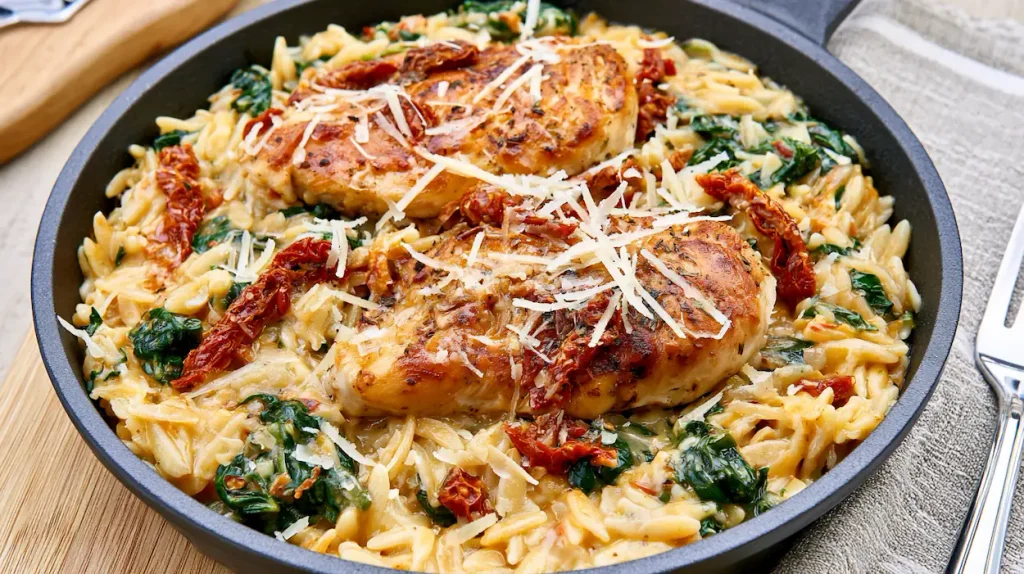
Creamy Tuscan Chicken Orzo
Ingredients
Equipment
Method
- Heat the olive oil in a large deep skillet. Season the chicken with salt, black pepper, paprika, and Italian seasoning. Cook for 5 to 7 minutes, stirring occasionally, until lightly golden. Transfer the chicken to a plate.
- Add the onion to the skillet and cook for 3 minutes. Stir in the garlic and sun-dried tomatoes and cook for 30 seconds.
- Stir in the orzo and chicken broth. Bring to a gentle simmer, then cook uncovered for 9 to 11 minutes, stirring often so the pasta does not stick to the bottom.
- Return the chicken to the pan. Stir in the cream, spinach, and Parmesan. Cook until the spinach wilts and the chicken reaches an internal temperature of 165 F (74 C). Remove from the heat and rest for 3 minutes before serving.