
Yes, you can roast frozen broccoli without thawing it. Spread the frozen florets on a large metal sheet pan, coat lightly with oil and roast in a fully heated oven. The main challenge is moisture: give that moisture room to escape, and you can get browned edges around tender centers.
This guide explains how to roast frozen broccoli, what texture to expect and why it sometimes turns soggy. A simple garlic version is included below.
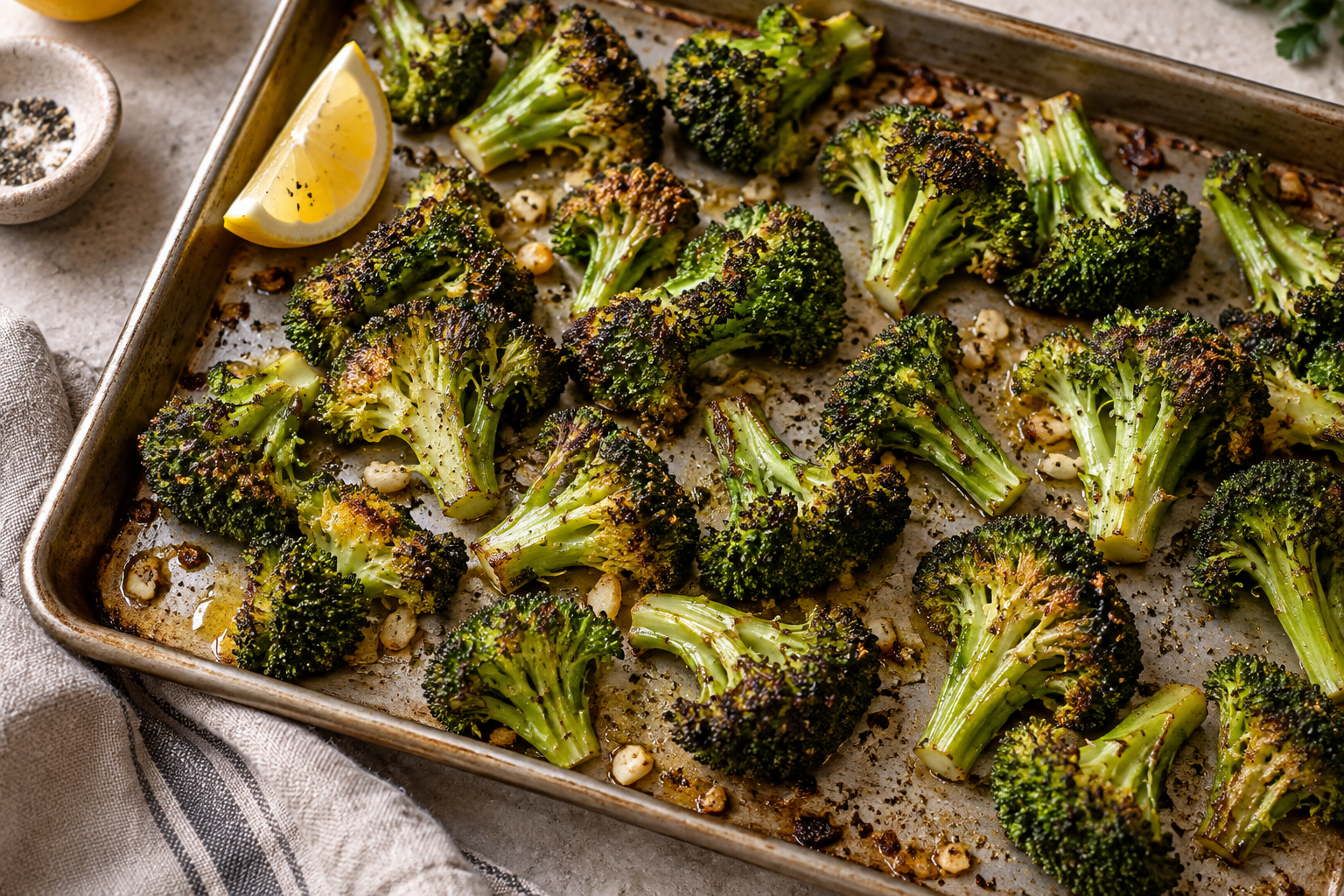
Should you thaw frozen broccoli before roasting?
For this method, no. Thawing adds an extra step and leaves wet surfaces that still need to dry in the oven. Shake off loose ice crystals, toss the frozen florets quickly with oil and seasonings, and get them into the oven right away. Do not rinse them first.
Frozen broccoli is usually blanched before freezing, so its center will generally be softer than freshly roasted broccoli. Aim for tender florets with browned tips, not the exact firm bite of a fresh head. The Budget Bytes frozen-broccoli method also demonstrates roasting directly from frozen.
Choose Frozen Broccoli Florets That Roast Evenly
Start by reading the bag, not just looking at the picture. “Broccoli florets” and “chopped broccoli” can give very different trays. A bag of florets usually contains more recognizable crowns, while chopped broccoli may include many small stem pieces. Both can be useful food, but tiny fragments are more likely to dry or darken before the largest pieces are tender. For the browned florets shown in this guide, choose a bag with reasonably similar pieces when possible.
Look at the broccoli when you open it. Shake off loose ice and separate pieces that come apart easily, then work quickly so they stay frozen. Do not force a knife through a solid block of frozen vegetables. If the contents are frozen into one large mass that cannot be separated safely, use the package’s cooking instructions instead of trying to apply the loose-floret roasting method unchanged. The recipe assumes that the pieces can be spread into a single layer.
Measure the quantity before adding oil rather than emptying a family-size bag onto one tray by habit. The space around the broccoli is part of the method. A small portion on a wide sheet pan can brown differently from a large portion crowded into the same area, even with the same oven setting. If you need more servings, increase the available tray space as well as the ingredients; simply extending the time does not solve every crowding problem.
Use this same ingredient check when planning a complete meal. Our chicken and broccoli dinner guide covers bowls, pasta bakes and other formats, but those methods do not all require the same broccoli texture. A soft floret can fit a saucy dish, while a roasted side benefits from distinct pieces. Decide what you want to serve first, then choose the bag and cooking method that suit that meal.
How to roast frozen broccoli with browned edges
Start with a fully heated oven
The recipe below uses 450°F (230°C). Preheat completely before loading the tray. If your oven runs hot or the florets are very small, check earlier; the appearance of the edges matters more than a rigid timer. Follow any longer cooking requirement printed on your broccoli package.
Use a wide, shallow metal pan
A large rimmed baking sheet gives steam somewhere to go. A deep casserole dish keeps the broccoli crowded and damp. For a pound of florets, use a roughly 13-by-18-inch half-sheet pan. Two smaller trays are better than one overloaded tray.
Leave gaps between florets
Arrange a single layer rather than a mound. Turn the broccoli after about 15 minutes, then continue roasting until the larger stems are tender and the tips are browned. Total roasting usually takes 25-30 minutes, depending on the size of the florets and the oven.
Finish with lemon after roasting
Dry seasonings such as garlic powder work well from the start. Lemon juice belongs at the table: pouring it over the whole tray early makes the surfaces wetter. Serve promptly because trapped steam softens the edges as the broccoli waits.
Read the Tray: Tender Stems, Browned Tips and Excess Steam
At the first turn, look at the tray before moving everything around. Some moisture early in roasting is normal because the frozen vegetables are heating and releasing water. The useful question is whether that moisture has room to escape. If the florets are piled together, spread them apart carefully or transfer part of the batch to another suitable tray. Keep your face and hands away from the hot steam released when you open the oven.
Check both a crown and a thick stem near the end of cooking. Dark tips alone do not tell you whether the largest pieces are tender. A fork should enter the stem without meeting a hard, cold center, and the broccoli should be cooked according to its package directions. Use the stated time as a starting range, then allow for your particular floret size and oven. Remove small pieces that have finished if the larger ones still need more time.
Browning does not need to cover every surface. The underside that touches the metal may develop color while the top stays greener, and turning exposes a different surface to the pan. Aim for a mix of tender centers and some toasted edges. Trying to make every branch uniformly dark can leave the thin tips bitter and dry. Frozen broccoli generally has a softer center than fresh broccoli, so do not keep roasting indefinitely in pursuit of the exact same bite.
If the center is done but the surface is still very wet, reconsider the tray space and moisture rather than automatically adding oil. A crowded tray traps steam; extra oil cannot create more room. Similar reasoning helps when troubleshooting vegetables that make a casserole watery, although the solutions depend on the dish. Here, the goal is an exposed roasting surface, while a casserole must also account for its sauce and other ingredients.
Why is my roasted frozen broccoli soggy?
- The tray is crowded: divide it between two pans. More oil will not solve lack of space.
- The oven was still warming up: wait for preheating to finish before adding the frozen vegetables.
- The bag contained lots of loose ice: shake that ice away without rinsing the broccoli.
- The pieces are uneven: small crumbs brown before large stems become tender. Remove browned small pieces early if necessary.
- The tray was covered after cooking: serve uncovered so the steam can escape.
Moisture causes a different problem in baked dishes. If vegetables are watering down your dinner, see how to keep a casserole from becoming watery. Roasting a side dish and preparing vegetables for a casserole need different moisture management.
Can I use parchment or foil?
Either can make cleanup easier, but check the manufacturer’s temperature rating, especially for parchment at 450°F. A lightly oiled bare metal pan gives direct contact for browning. Avoid crowding whichever surface you use, and use oven mitts when turning the tray.
Season Roasted Broccoli Without Losing the Browned Edges
Choose a simple flavor direction before you begin. Garlic powder and black pepper make a flexible base for many dinners. A pinch of chili flakes can add heat, while a little smoked paprika gives a different savory note. Use a light hand with any blend that already contains salt. The recipe’s seasoning is a starting point; a salty cheese or sauce added later should influence how much additional salt you use at the finish.
Separate dry seasoning from wet finishing ingredients. Dry spices can go on with the oil, while lemon juice, a dressing or a creamy sauce is easier to control after roasting. Pouring a wet sauce over the whole tray makes the surface softer, which may be pleasant for a bowl but is less useful when you want distinct browned edges. Taste one floret before dressing the entire batch and add the finish to individual portions when preferences differ.
For a lemon and Parmesan version, use the zest and cheese mentioned above while the broccoli is hot, then offer lemon wedges separately. For a dairy-free plate, use lemon zest, herbs and a drizzle of a dressing you enjoy instead of cheese. Neither variation requires changing the broccoli’s roasting time just to accommodate the topping. Add fresh delicate herbs at serving time so their flavor remains noticeable rather than disappearing during a long roast.
A small serving of garlic Parmesan sauce can turn the vegetable into a richer side. If making your own, our guide to keeping cream sauce smooth explains the finishing method. Spoon it alongside the broccoli or over only part of the serving, rather than covering the tray while you wait for dinner. A dry roasted surface and a smooth sauce provide different textures; keeping them separate until eating preserves that contrast.
What goes well with roasted frozen broccoli?
Use it as a simple vegetable alongside chicken enchilada skillet, or spoon it next to creamy mushroom gnocchi for a contrast to the sauce. For another complete tray dinner, try sheet pan sausage, sweet potatoes and broccoli, following that recipe’s separate timing.
You can also stir leftover roasted florets into pasta just before serving. For a baked option, our chicken and broccoli pasta bake provides the quantities and sauce method for the whole dish.
Fit Frozen Broccoli into a Weeknight Cooking Schedule
Start by comparing the broccoli’s oven setting with the main dish. If the main course needs a much lower temperature or uses most of the oven space, do not assume both recipes can share the same shelf and timing without changes. A stovetop main is often convenient because it lets the broccoli use the hot oven on its own. Preheat the oven first, prepare the tray, and begin the main dish once the broccoli is roasting.
For example, a ground beef and rice skillet leaves the oven available for the vegetables. Read both methods before starting and aim to have the broccoli finish close to serving time. Set a reminder for the turn so you do not forget the tray while concentrating on the skillet. Keep in mind that opening the oven several times to check another dish can change how quickly the broccoli browns.
If you want a complete tray meal, use a recipe written for that combination rather than adding raw meat to this vegetable-only method. Ingredients have different cooking requirements, and raw meat introduces its own handling and doneness checks. The linked sausage, sweet potato and broccoli dinner provides its own sequence. This guide’s timing applies to the broccoli side; it is not a universal schedule for everything that might fit on a baking sheet.
Prepare serving bowls and toppings while the tray is in the oven, then bring the broccoli to the table promptly. Do not seal the hot florets under a tight cover just to hold their warmth; trapped steam softens the surface. If you are saving portions for another meal, expect the refrigerated broccoli to be softer and plan accordingly. Bowls and pasta can make good use of that texture, while a freshly roasted batch is the better choice when browned edges are the main attraction.
Koukie’s Little Touch
I add finely grated lemon zest and a light shower of Parmesan as soon as the broccoli leaves the oven. The zest wakes up the roasted flavor, while the cheese melts lightly over the hot browned edges.
Helpful Tips
- Roast the broccoli directly from frozen; do not thaw or rinse it.
- Shake off loose ice crystals before adding the oil.
- Use a large metal sheet pan and leave space between the florets.
- Turn the pan once if your oven browns unevenly.
Storage and reheating
Refrigerate promptly in a covered container and use within three days. Reheat until thoroughly hot; the oven helps dry the surface again, while the microwave gives a softer result. Keep lemon or creamy dressing separate until serving. Reheated broccoli will not be as crisp as a freshly roasted tray.
Frequently asked questions
Can I double the recipe?
Yes, using two large pans. Rotate their positions and allow extra time if your oven loses heat with both trays inside.
Can I use a frozen vegetable mix?
Different vegetables and sizes cook at different speeds. This timing is for broccoli florets; follow the package instructions for a mixed bag and expect more variation.
Is frozen broccoli already cooked?
Blanching does not mean every product is ready to eat. Cook according to the package directions rather than assuming the florets are safe to eat straight from the bag.
Garlic Roasted Frozen Broccoli Recipe
Garlic Roasted Frozen Broccoli
Ingredients
Method
- Preheat the oven to 450°F (230°C). Prepare a large rimmed metal sheet pan. If using parchment, check it is rated for this temperature.
- Shake loose ice crystals from the broccoli without rinsing or thawing it. Toss quickly with olive oil, garlic powder, salt and pepper.
- Spread florets in one layer with gaps between them. Roast for 15 minutes. Turn with a spatula, then roast 10-15 minutes more, until cooked through, tender and browned at the edges. Follow any longer cooking requirement on the package.
- Serve immediately with lemon wedges. Add lemon juice at the table so the roasted edges stay drier.