Ground beef and tortillas are two ingredients I often turn to when dinner needs to be flexible. With one well-seasoned pan of beef, I can make tacos for the fastest option, quesadillas when I want crisp edges, or a casserole when I am feeding more people.
This is not one fixed recipe. It is a practical guide for choosing a dinner according to the time, cheese, vegetables, and sauces you already have.
Quick Answer: What Can I Make with Ground Beef and Tortillas?
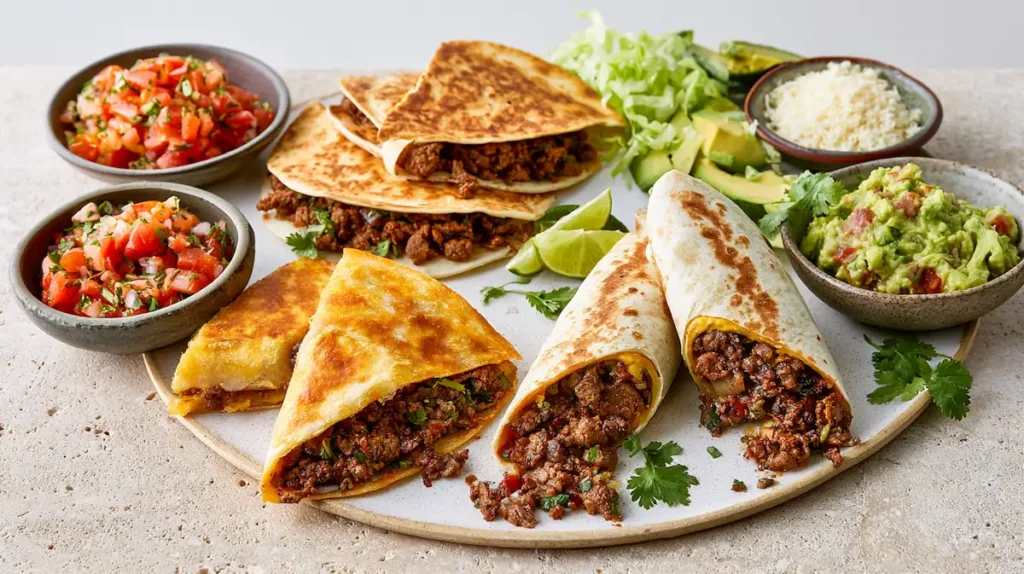
Make ground beef tacos for the quickest meal, quesadillas when you want something crisp and cheesy, burritos for a filling handheld dinner, or a tortilla casserole when you need to feed several people. You can also cut tortillas into wedges for nachos, bake them into taco cups, or serve the seasoned beef over crisp tostadas.
| Dinner idea | Best feature | Approximate cooking time | Useful additions |
|---|---|---|---|
| Tacos | Fast and customizable | 20 minutes | Lettuce, salsa, cheese |
| Quesadillas | Crisp and cheesy | 20 minutes | Peppers, onions, beans |
| Burritos | Filling and portable | 25 minutes | Rice, beans, corn |
| Tortilla casserole | Good for a family meal | 40 minutes | Tomato sauce, beans, cheese |
| Tostadas | Crunchy open-faced option | 25 minutes | Avocado, cabbage, lime |
Start with One Versatile Ground Beef Filling
Heat a large skillet over medium-high heat and cook the ground beef until no pink remains, breaking it into small pieces as it browns. Drain excess fat when necessary. Add chopped onion if you have it, followed by garlic, chili powder, ground cumin, paprika, salt, and black pepper. Stir in a few tablespoons of water or tomato sauce and simmer briefly so the seasoning coats the beef.
Cook ground beef to a safe internal temperature of 160°F (71°C). Once cooked, this filling can move directly into tacos or quesadillas, or it can be combined with rice, beans, vegetables, or cheese for the other meals below.
1. Make Quick Ground Beef Tacos
Warm the tortillas in a dry skillet for about 20 seconds per side, then fill them with the seasoned beef. Add shredded lettuce or cabbage for crunch, tomato or salsa for freshness, and cheese or avocado for richness. A squeeze of lime helps balance the savory filling.
Do not overfill the tortillas. A modest line of beef down the center leaves room for toppings and makes each taco easier to fold. If you prefer a lighter variation, the same method works with the filling style used in LunEat’s ground turkey tacos.
2. Cook Crispy Ground Beef Quesadillas
Place a tortilla in a lightly greased skillet, scatter cheese over one half, and add a thin layer of cooked beef. Fold the tortilla and cook over medium heat until golden underneath. Flip once and continue until the second side is crisp and the cheese has melted.
Keep the filling fairly dry so steam does not soften the tortilla. For a more detailed variation, see LunEat’s Smashburger Quesadillas, which combine browned beef, melted cheese, and a crisp tortilla.
3. Roll Ground Beef Burritos
Large flour tortillas work best for burritos because they bend without tearing. Layer the beef with rice, drained beans, corn, salsa, and cheese. Keep the ingredients in a compact horizontal line, fold the sides inward, and roll from the bottom while holding the filling firmly in place.
For a crisp finish, place the rolled burrito seam-side down in a dry skillet and toast both sides. If the tortillas feel stiff, warm them first so they become flexible.
4. Layer an Easy Tortilla Casserole
Cut the tortillas into halves or quarters and use them like lasagna sheets. Layer them in a baking dish with seasoned ground beef, beans, tomato or enchilada sauce, and cheese. Repeat the layers, cover the dish, and bake at 375°F (190°C) until hot throughout. Uncover near the end so the cheese can brown.
Avoid adding too much thin sauce because tortillas absorb moisture quickly. The goal is enough sauce to soften the layers without creating a watery base. LunEat’s Taco Lasagna Casserole is a useful example of this layered dinner style.
5. Turn the Tortillas into Tostadas or Nachos
For tostadas, lightly brush tortillas with oil and bake them flat until crisp. Spoon the cooked beef over the top and finish with beans, lettuce, salsa, and avocado. For quick nachos, cut tortillas into wedges, bake until crisp, then cover the chips with beef and cheese and return them to the oven just until the cheese melts.
Match the Filling’s Moisture to the Tortilla Dish
A taco filling, a quesadilla filling and a tortilla casserole should not all be equally saucy. For tacos, the meat can be moist without dripping from the tortilla. For quesadillas, simmer away loose liquid before filling so the tortilla can crisp against the pan. For a layered casserole, measured sauce is part of what softens the tortilla layers. Choose the final dish before deciding how much sauce belongs in the beef.
If you have already made a wet filling, do not immediately add a large amount of cheese to absorb it. Reduce loose liquid gently before assembling a crisp dish, or choose a saucy format that suits what you have. The chicken enchilada skillet shows how tortilla pieces can deliberately soften in sauce, although it uses its own chicken-based recipe. That texture is useful when desired; it is disappointing only when you were expecting a crisp quesadilla.
How to Choose the Best Idea
- Choose tacos when everyone wants different toppings.
- Choose quesadillas when speed and a crisp texture matter most.
- Choose burritos for meal prep or a portable dinner.
- Choose a casserole when serving a group or using several leftovers.
- Choose tostadas when the tortillas are slightly dry but still fresh enough to bake.
Stretch Ground Beef with Beans or Rice Without Overfilling
Drained beans and cooked rice can help a small amount of beef make more servings, but add them in a way that still allows the tortillas to fold. Start with a thin layer of filling and leave space at the edges. A burrito that closes neatly is easier to toast and eat than one packed so tightly that it tears. Keep bulky fresh toppings outside the folded portion when space is limited.
Use cooked rice when assembling a quick burrito; dry rice will not cook inside a briefly toasted tortilla. If you want the rice to cook with the beef, use the measured broth and covered method in the one-pot ground beef and rice skillet. Serve that dish as written rather than adding uncooked rice to this general filling. Different starches need their own liquid and cooking time, even when the finished meals share similar ingredients.
What Else Can I Add?
Beans stretch the beef and make the filling go further. Cooked rice adds bulk, while corn, bell peppers, zucchini, mushrooms, or spinach add color and texture. If you have zucchini to use, LunEat’s Ground Beef Zucchini Skillet offers another one-pan direction.
For toppings, use what contrasts with the warm beef: crisp cabbage, fresh tomato, pickled onion, cilantro, lime, salsa, plain yogurt, sour cream, or avocado. You do not need every topping; two or three contrasting elements are enough.
Set Up a Taco Night with Three Useful Topping Groups
Build the topping selection around contrast instead of the number of bowls. Choose one crunchy component, such as shredded cabbage or lettuce; one fresh or tangy component, such as salsa or lime; and one creamy component, such as avocado or yogurt. A few contrasting choices make the seasoned beef more interesting without requiring a long shopping list or leaving several barely used containers afterward.
Drain very watery salsa when it is going inside a folded tortilla, or spoon it onto the plate instead. Add chopped tomatoes and greens close to serving time so they stay fresh. Keep hot sauce separate when people prefer different heat levels. If excess liquid is a recurring problem in layered versions, the guide to avoiding watery casseroles explains how vegetables, beans and sauces contribute moisture. Fixing the ingredients before assembly is easier than trying to rescue a soaked tortilla afterward.
Common Mistakes to Avoid
- Leaving the beef in large pieces: smaller crumbles stay inside folded tortillas more easily.
- Using a watery filling: simmer off excess liquid before assembling quesadillas or burritos.
- Skipping tortilla warming: cold tortillas are more likely to crack.
- Overfilling: use less filling than you think you need, especially for burritos and quesadillas.
- Cooking over very high heat: the tortilla may burn before the cheese melts or the center becomes hot.
Storage and Reheating
Refrigerate cooked ground beef within two hours and use it within three to four days. Store the beef separately from tortillas and fresh toppings whenever possible. Reheat the filling until steaming hot, then assemble the meal. Quesadillas reheat best in a skillet or air fryer because dry heat restores their crisp surface.
How I Serve Ground Beef and Tortillas at Home
At home, I put the filling, warm tortillas, and toppings in separate bowls so everyone can build their own plate. It keeps dinner relaxed and makes leftovers easy to use the next day.
Plan Two Different Dinners from One Grocery List
A useful shopping plan is to choose one tortilla meal and one bowl or skillet meal that share a few ingredients. For example, peppers, beans, cheese and yogurt can support tacos one night and a potato bowl on another. The loaded potato taco bowls offer that second format with their own quantities and roasting method. Planning around shared groceries provides variety without treating every recipe as an interchangeable set of instructions.
If cooking a batch of beef ahead, divide it into portions and follow the storage guidance below. Keep the tortillas and fresh toppings separate, and reheat only the portion you will use. A crisp quesadilla can then feel different from the previous taco dinner without reheating the whole batch repeatedly. Label prepared containers so you know when the meat was cooked; assembling it into a new meal does not make older leftovers newly cooked food.
Frequently Asked Questions
Can I use corn tortillas with ground beef?
Yes. Corn tortillas work especially well for tacos and tostadas. Warm them before folding because they can crack when cold. Flour tortillas are usually easier for large burritos and folded quesadillas.
What can I make if I do not have taco seasoning?
Season the beef with chili powder, cumin, paprika, garlic, salt, and black pepper. Oregano and onion powder are useful additions but are not essential.
How do I keep ground beef quesadillas from becoming soggy?
Drain excess fat, simmer away watery sauce, and use a thin layer of filling. Cook over medium heat so the tortilla becomes crisp while the cheese melts.
Can I prepare the ground beef filling ahead?
Yes. Cook and cool the filling, refrigerate it in a covered container, and use it within three to four days. Reheat only the portion you need before assembling the tortillas.
What is the easiest ground beef and tortilla dinner?
Soft tacos are usually the easiest because they require only seasoned beef, warmed tortillas, and a few toppings. Quesadillas are almost as quick when you have cheese available.
More Easy Dinner Inspiration
For more flexible weeknight combinations, browse LunEat’s Easy Dinner Recipes and Cheap Dinner Ideas That Save Money.
Final Answer
Start by browning the beef well and draining any excess fat. From there, choose soft tacos for speed, quesadillas for crunch, burritos for a filling meal, or a layered casserole when everyone will eat together.
The filling can be prepared ahead and refrigerated, which makes the next meal much easier. Warm the tortillas just before serving so they stay flexible and do not crack.