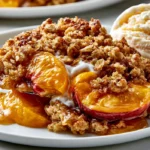
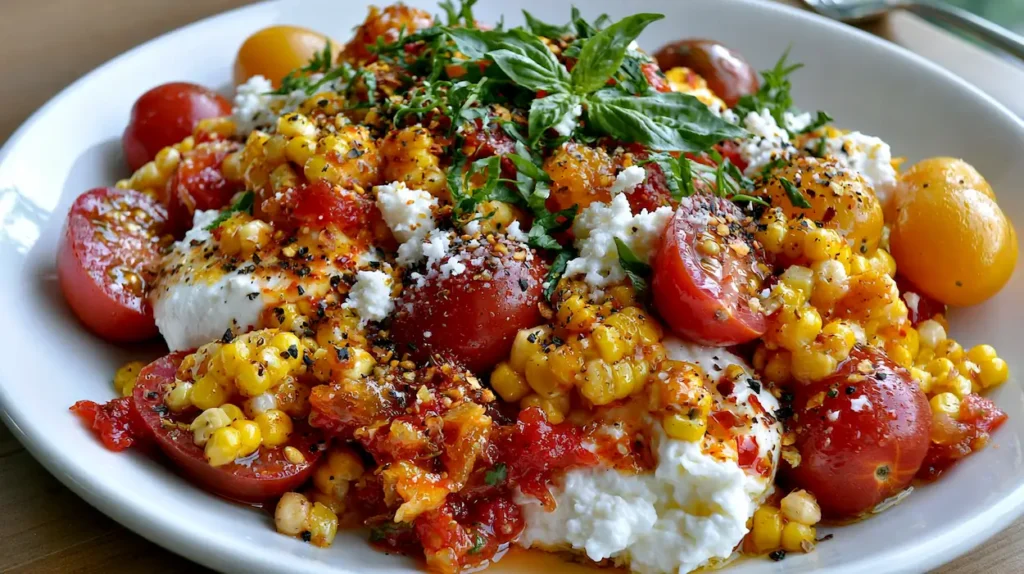
Late summer is when tomatoes, corn, zucchini, peppers, peaches, and berries often need to be used quickly. I gathered these recipes to help turn that produce into actual meals and desserts instead of letting it wait in the refrigerator.
Start with the ingredient that is ripest. Tomatoes and berries are best used first, while peppers and zucchini usually give you a little more time. Each idea below includes a practical way to keep the fresh flavor noticeable.
Table of Contents
Recipe Collection at a Glance
| Number | Recipe | Prep Time | Cook Time | Servings |
|---|---|---|---|---|
| 1 | Heirloom Tomato & Burrata Salad | 15 mins | 0 mins | 4 |
| 2 | Creamy Sweet Corn Chowder | 15 mins | 30 mins | 6 |
| 3 | Crispy Zucchini Parmesan Fritters | 20 mins | 15 mins | 4 |
| 4 | Roasted Peach & Arugula Salad | 15 mins | 10 mins | 4 |
| 5 | Fresh Tomato & Corn Pasta | 10 mins | 20 mins | 4 |
| 6 | Stuffed Bell Peppers | 20 mins | 40 mins | 4 |
| 7 | Blueberry Peach Crisp | 20 mins | 40 mins | 8 |
| 8 | Grilled Summer Vegetable Platter | 15 mins | 15 mins | 6 |
| 9 | Caprese Stuffed Avocados | 15 mins | 0 mins | 4 |
| 10 | Rustic Peach Galette | 25 mins | 40 mins | 8 |
Why You’ll Love These Recipes
- They highlight the freshest fruits and vegetables of late summer while they’re at their most flavorful.
- Every recipe is made with simple, easy-to-find ingredients and straightforward instructions.
- From light salads to cozy desserts, there’s something for every meal before the season changes.
Choose a Recipe by the Texture of Your Produce
Before deciding on dinner, separate produce that will hold its shape from produce that is better suited to a softer dish. Firm, ripe tomatoes make attractive slices for the burrata salad, while tender cherry tomatoes work well in the pasta because they are meant to burst into a sauce. Both dishes use tomatoes, but they ask those tomatoes to do different jobs.
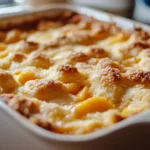
The same approach helps with peaches. Fruit that slices cleanly is easier to arrange in a galette or on arugula. Very juicy, ripe peaches can go into a spoonable crisp, where a neat shape matters less. Ripe fruit should still be sound; baking is not a way to make spoiled fruit usable. Choose the recipe around the fruit you actually have instead of trying to force every peach into the same dessert.
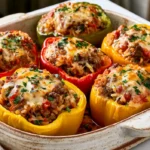
Look at size as well as ripeness. A large zucchini may contain a wetter, seedier middle than a small one. For fritters, remove an overly seedy center before grating the usable flesh, then pay attention to squeezing out moisture. Similar-sized pepper shells are easier to arrange and fill evenly. If peppers are your main ingredient, the classic stuffed peppers recipe provides a separate beef-and-rice version with more detailed preparation steps.
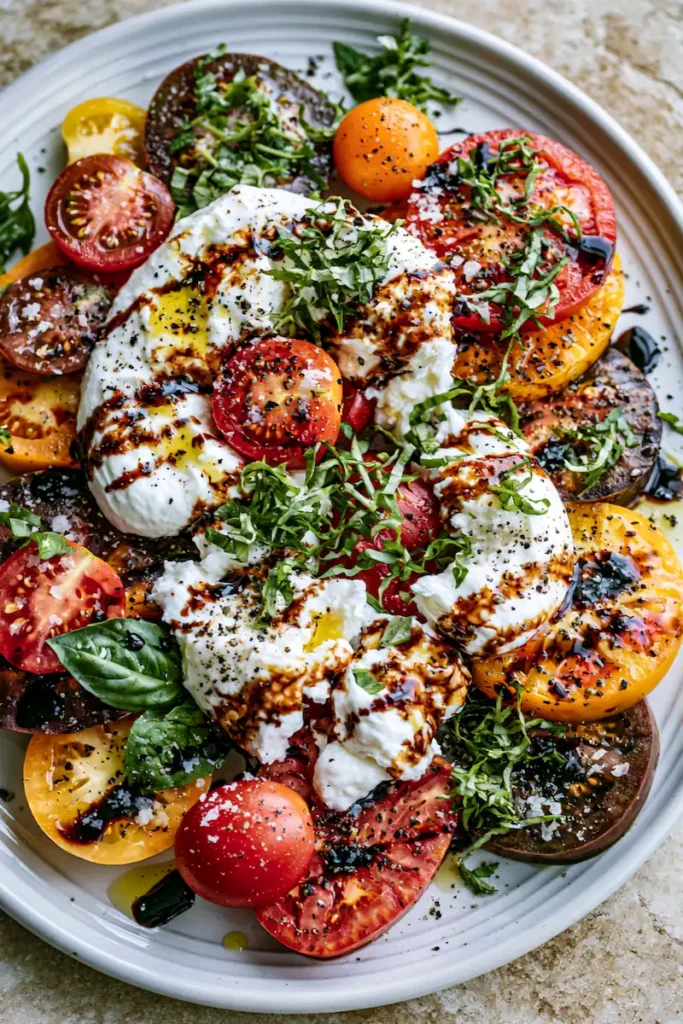
1. Heirloom Tomato & Burrata Salad
Ingredients
- 4 heirloom tomatoes, sliced
- 8 oz burrata
- Fresh basil leaves
- 2 tbsp extra virgin olive oil
- 1 tbsp balsamic glaze
- Flaky sea salt
- Fresh black pepper
Instructions
- Arrange tomato slices on a serving platter.
- Tear the burrata and place it over the tomatoes.
- Scatter fresh basil leaves on top.
- Drizzle with olive oil and balsamic glaze.
- Season with salt and pepper before serving.
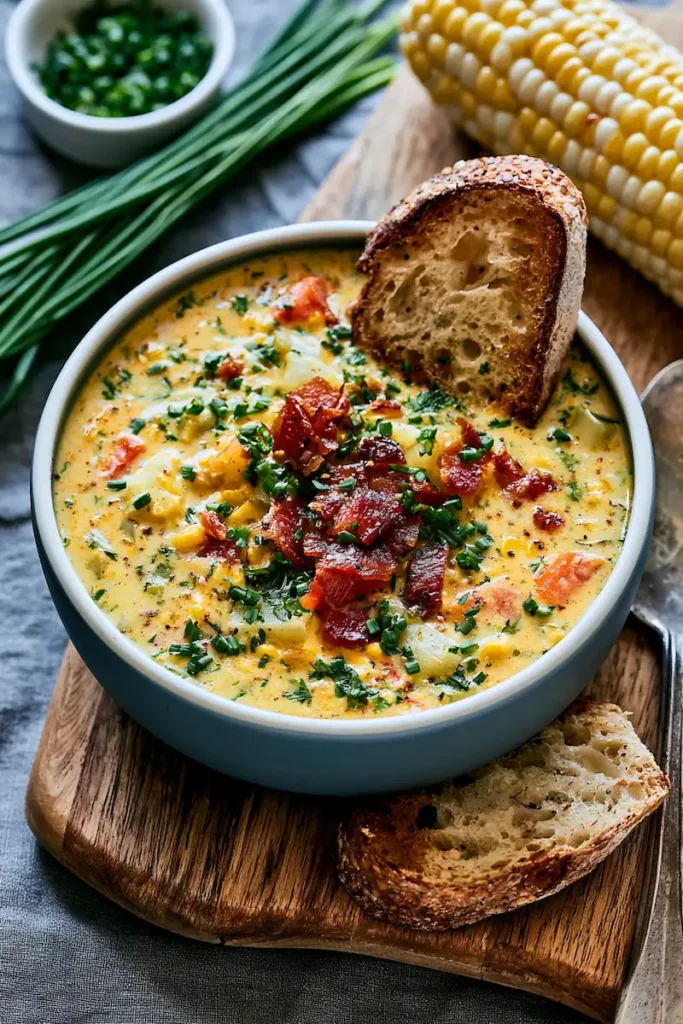
2. Creamy Sweet Corn Chowder
Ingredients
- 6 ears fresh corn
- 2 tbsp butter
- 1 onion, diced
- 2 garlic cloves, minced
- 2 potatoes, diced
- 4 cups vegetable broth
- 1 cup heavy cream
- Salt and pepper
- Fresh chives
Instructions
- Sauté onion and garlic in butter.
- Add potatoes, corn, and broth.
- Simmer for 25 minutes.
- Blend half of the soup for a creamy texture.
- Stir in cream, season, and garnish with chives.
3. Crispy Zucchini Parmesan Fritters
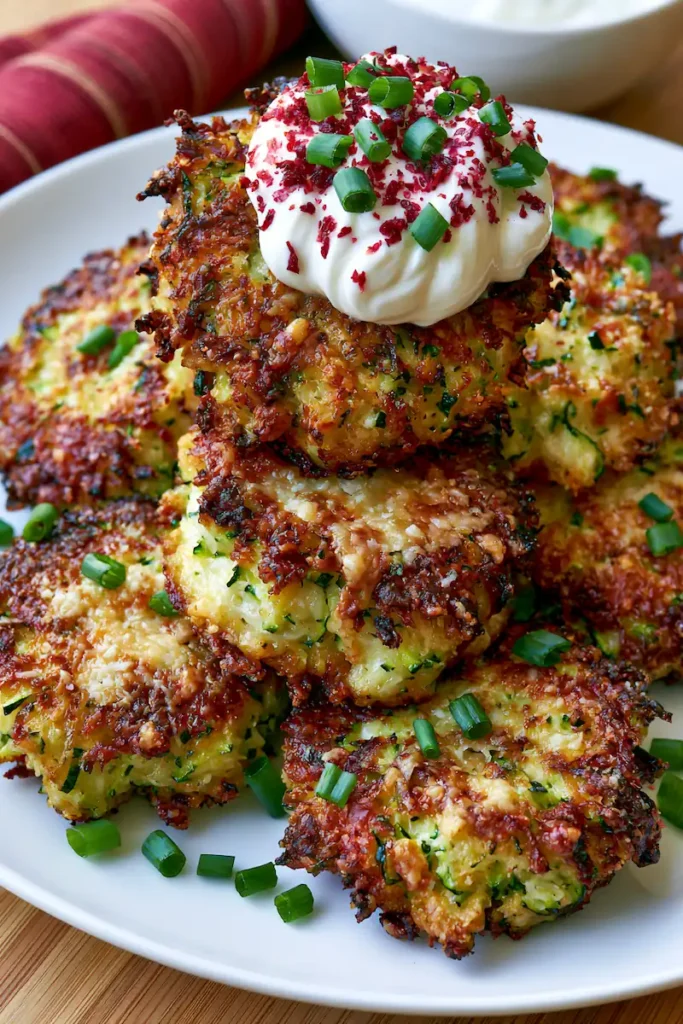
Ingredients
- 2 medium zucchini, grated
- ½ cup Parmesan cheese
- ½ cup flour
- 2 eggs
- 2 green onions, chopped
- Salt and pepper
- Olive oil
Instructions
- Squeeze excess moisture from the zucchini.
- Mix all ingredients together.
- Heat oil in a skillet.
- Fry spoonfuls until golden on both sides.
- Serve with Greek yogurt or sour cream.
4. Roasted Peach & Arugula Salad
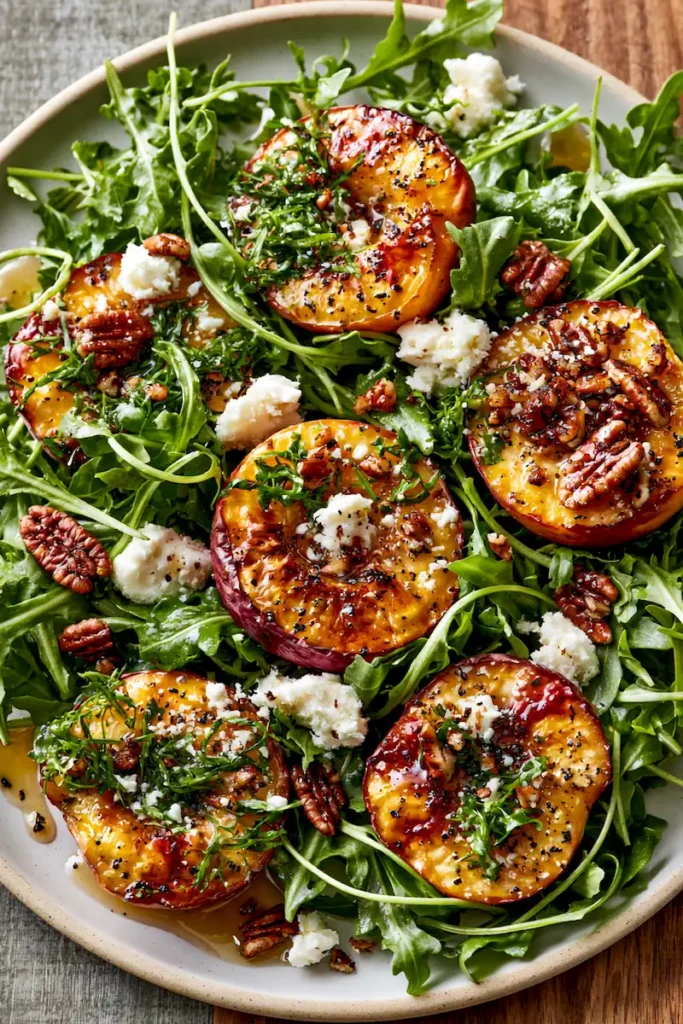
Ingredients
- 3 peaches
- 5 cups arugula
- 4 oz goat cheese
- ¼ cup toasted pecans
- Honey vinaigrette
Instructions
- Roast peach halves for 8–10 minutes.
- Arrange arugula on a platter.
- Add peaches, goat cheese, and pecans.
- Drizzle with honey vinaigrette.
5. Fresh Tomato & Corn Pasta
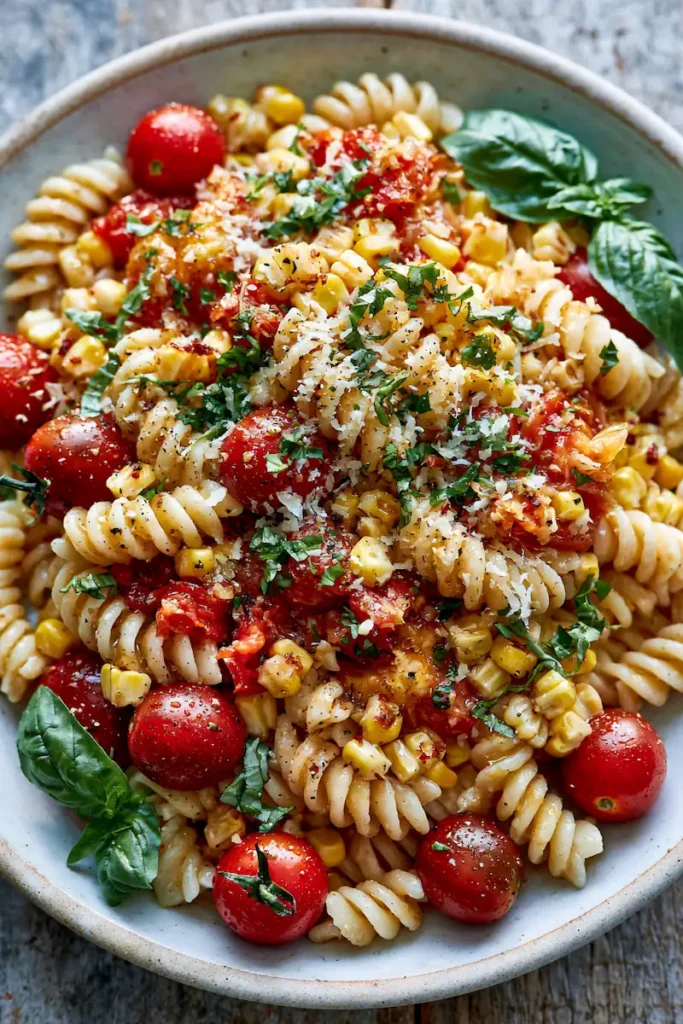
Ingredients
- 12 oz pasta
- 2 cups cherry tomatoes
- 2 ears corn
- 3 garlic cloves
- Olive oil
- Parmesan cheese
- Fresh basil
Instructions
- Cook the pasta.
- Sauté garlic with olive oil.
- Add tomatoes until they burst.
- Stir in corn.
- Toss with pasta, basil, and Parmesan.
6. Stuffed Bell Peppers
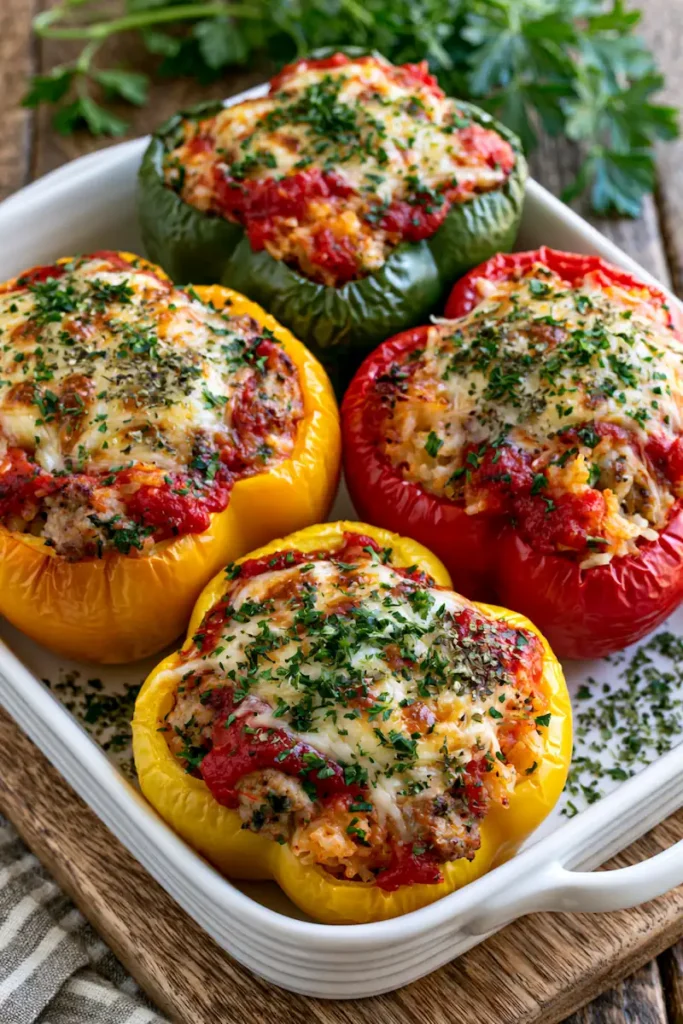
Ingredients
- 4 bell peppers
- 1 lb ground turkey
- 1 cup cooked rice
- 1 cup tomato sauce
- 1 cup shredded mozzarella
- Italian seasoning
Instructions
- Brown the turkey.
- Mix with rice, sauce, and seasoning.
- Fill the peppers.
- Top with cheese.
- Bake at 375°F (190°C) for 40 minutes.
7. Blueberry Peach Crisp
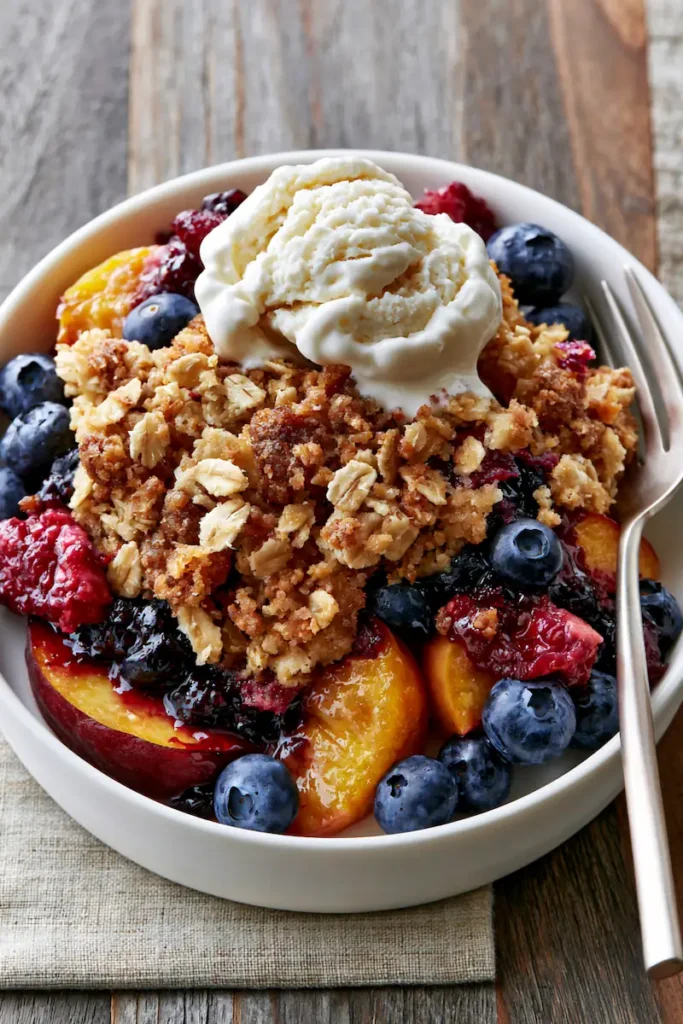
Ingredients
- 4 peaches
- 2 cups blueberries
- ½ cup sugar
- 1 tbsp cornstarch
- 1 cup rolled oats
- ¾ cup flour
- ½ cup brown sugar
- ½ cup butter
Instructions
- Toss fruit with sugar and cornstarch.
- Mix oats, flour, brown sugar, and butter.
- Sprinkle topping over fruit.
- Bake for 40 minutes at 350°F (175°C).
- Serve warm with vanilla ice cream.
8. Grilled Summer Vegetable Platter
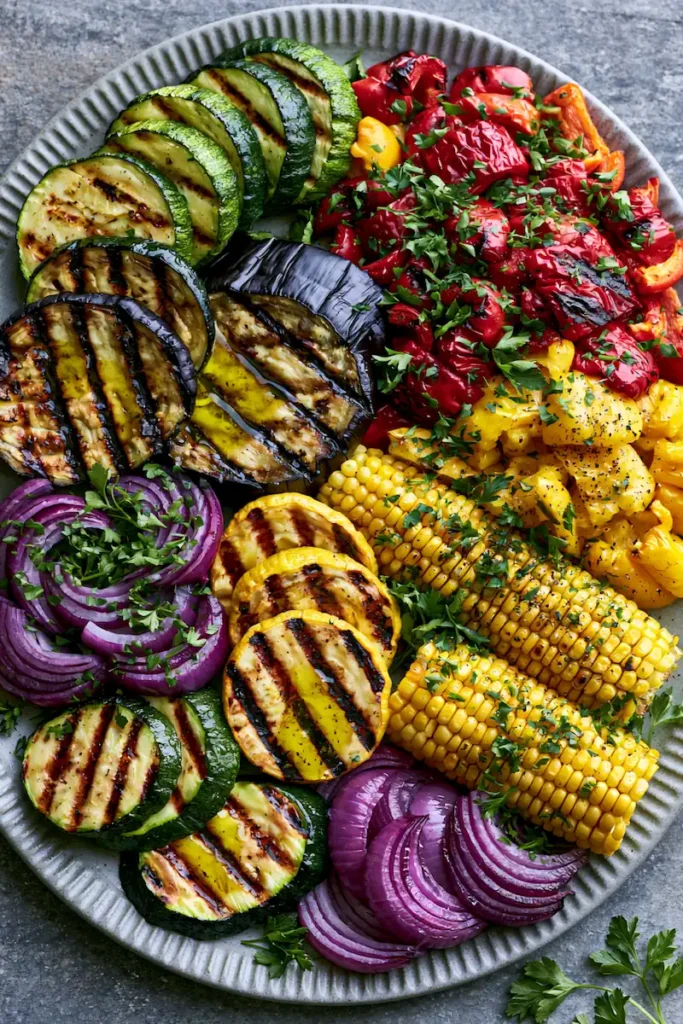
Ingredients
- Zucchini
- Eggplant
- Bell peppers
- Corn
- Red onions
- Olive oil
- Lemon juice
- Fresh parsley
Instructions
- Slice vegetables evenly.
- Brush with olive oil.
- Grill until lightly charred.
- Finish with lemon juice and parsley.
9. Caprese Stuffed Avocados
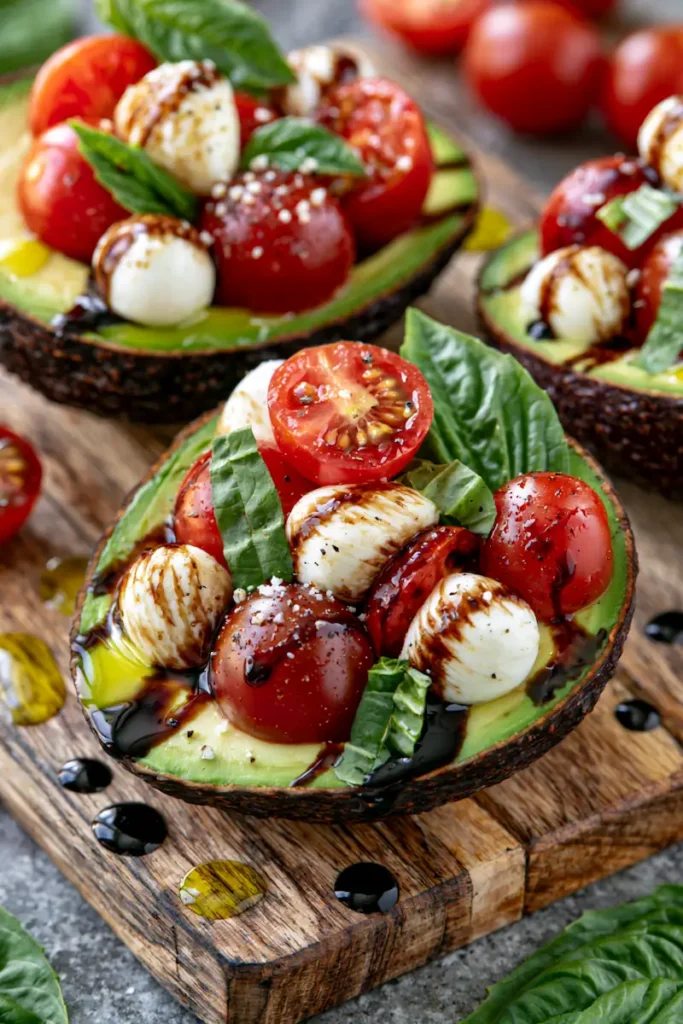
Ingredients
- 2 avocados
- 1 cup cherry tomatoes
- 8 oz fresh mozzarella pearls
- Fresh basil
- Balsamic glaze
- Olive oil
Instructions
- Halve and pit the avocados.
- Combine tomatoes, mozzarella, and basil.
- Fill each avocado.
- Drizzle with olive oil and balsamic glaze.
10. Rustic Peach Galette
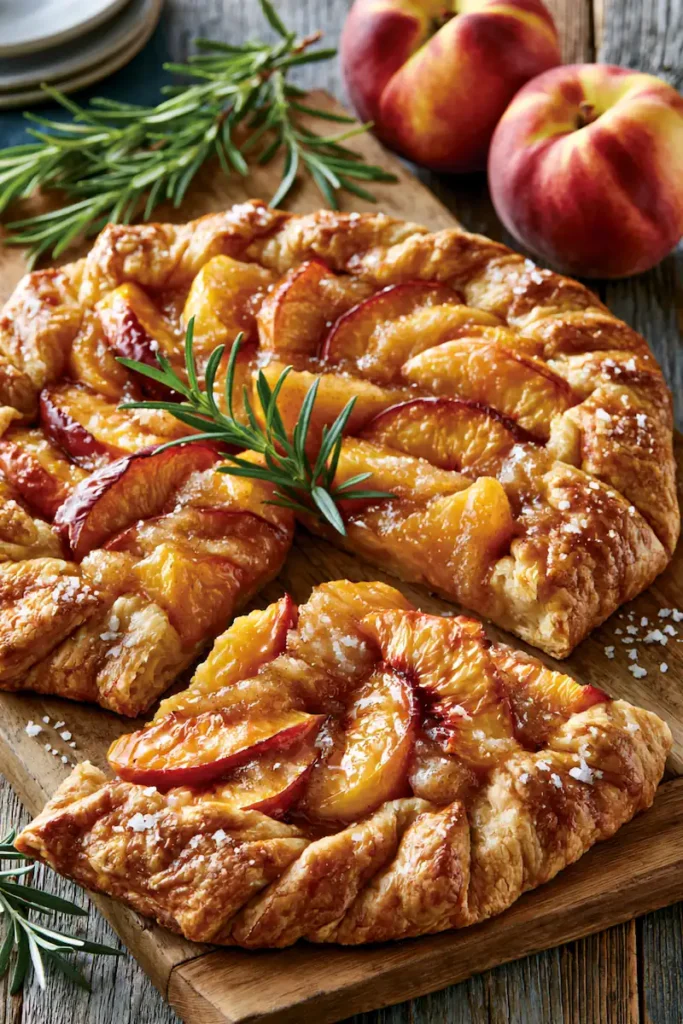
Ingredients
- 1 pie crust
- 4 peaches
- ¼ cup sugar
- 1 tbsp cornstarch
- 1 egg
- Coarse sugar
Instructions
- Roll out the pie crust.
- Toss peaches with sugar and cornstarch.
- Place filling in the center.
- Fold edges over the fruit.
- Brush with egg wash.
- Sprinkle with coarse sugar.
- Bake at 400°F (200°C) for 40 minutes.
Control Moisture Without Losing Fresh Summer Flavor
Juicy produce is part of the appeal of these meals, but the right amount of moisture depends on the dish. Tomato juices are welcome in pasta, where they become part of the sauce. Those same juices can dilute a plated salad if the tomatoes sit under dressing for a long time. Assemble the salad close to serving and use a platter that can hold the natural juices without overflowing.
For zucchini fritters, squeeze the grated zucchini in a clean kitchen towel before combining it with the eggs and flour. If the mixture releases another puddle while you work, avoid adding large amounts of flour automatically. More flour can make the center heavy. Cook a small test fritter to assess whether the mixture holds together, then shape the rest into similarly sized portions so their centers cook consistently.
Give grilled vegetables enough space for their surfaces to cook instead of piling them together. Keep different vegetables in separate areas so you can remove tender zucchini while firmer pieces continue cooking. Lemon juice and herbs work well as a finishing step, after the vegetables leave the heat.
These choices also matter when vegetables go into baked meals. The guide to preventing a watery casserole explains how ingredient moisture, sauce thickness and the baking dish interact. Use that guidance when adapting your produce into a casserole on another night.
Nutrition
Since this article contains multiple recipes, nutrition values vary depending on the dish. Fresh produce such as tomatoes, corn, zucchini, peaches, peppers, and berries provides fiber, vitamins, antioxidants, and natural sweetness, making these recipes balanced choices for late summer meals.
Practical Tips for Last of Summer Produce Recipes
- Visit your local farmers’ market for the freshest seasonal produce.
- Freeze extra corn kernels and berries to enjoy later in the year.
- Roast vegetables in batches for easy meal prep.
- Mix fresh herbs into salads just before serving for the best flavor.
- Pair these recipes with crusty bread, grilled chicken, or a simple green salad for complete meals.
Build Two Meals from One Small Produce Shopping List
A practical summer menu can repeat ingredients while changing the cooking method. Buy tomatoes and basil for the burrata salad, then reserve a separate portion for the tomato and corn pasta. The first meal emphasizes fresh slices and creamy cheese; the second turns the tomatoes into a warm coating for pasta. Set aside the later portion before assembling the salad so you do not accidentally dress everything at once.
Corn can follow the same pattern. Use some kernels in the pasta and plan the remaining ears for chowder. Count what each recipe needs before shopping, and check pantry ingredients such as broth, potatoes and pasta at the same time. A list organized around two complete meals is more useful than a large basket of produce with no plan for the supporting ingredients.
For a lighter preparation to accompany grilled vegetables, consider Buffalo chickpea salad. Its tangy dressing brings a different flavor to the table, so you can keep the vegetables simply seasoned. Prepare each recipe according to its own instructions rather than pouring the salad dressing over vegetables intended for grilling.
Leave room for appetite and schedule changes. Planning to use the same ingredients twice does not require cooking both meals on the same evening. Keep uncooked ingredients separate from finished dishes, and choose the second meal when you can give it the attention it needs.
How I Use the Last Summer Produce in My Kitchen
At the end of summer, I build meals around whichever vegetables and fruit look best rather than following a rigid plan. It is an easy way to enjoy the season fully and avoid letting good produce go to waste.
Match Summer Fruit Desserts to Your Serving Plans
Choose the dessert format before choosing the prettiest photograph. A crisp is served with a spoon and can accommodate an informal family meal. A galette requires rolling dough and arranging a border, but it creates a pastry centerpiece. Neither is automatically the better choice: the useful question is whether you want individual portions, clean slices or a dish everyone can scoop from.
If you need a bake that can be portioned without a serving spoon, try caramel peach cobbler muffins using their own ingredient quantities and muffin method. For blueberries, the blueberry cream cheese bread loaf offers a sliceable alternative. Its filling needs cooling time, so include that time in your plan instead of counting only the minutes in the oven.
When making a fruit dessert alongside dinner, check the oven temperatures before starting. The crisp and galette in this collection use different settings. Bake sequentially when necessary rather than putting both in together and assuming the listed timings still apply. Prepare the serving dishes and any topping while the dessert finishes, then let the fruit filling settle enough to serve comfortably.
Use the stated fruit quantities as your starting point. Adding an extra bowl of berries changes the balance between fruit, thickener and topping. Save surplus fruit for another recipe instead of overfilling the pan.
Frequently Asked Questions
What produce is considered late summer produce?
Tomatoes, corn, zucchini, cucumbers, eggplant, peppers, peaches, nectarines, blueberries, and blackberries are among the most popular late summer ingredients.
Can I prepare these recipes ahead of time?
Many of them can. Soups, stuffed peppers, and crisps reheat beautifully, while salads are best assembled just before serving.
Can I freeze any of these recipes?
Yes. Corn chowder, stuffed peppers, and peach crisp freeze well. Fresh salads are best enjoyed immediately.
Are these recipes vegetarian?
Most are naturally vegetarian. The stuffed peppers can easily be made vegetarian by replacing the ground turkey with beans or lentils.
How do I know when summer produce is at its peak?
Choose fruits and vegetables that feel heavy for their size, have vibrant color, and give off a fresh, sweet aroma.
Final Thoughts on Last of Summer Produce Recipes
I choose from this list by looking at what needs to be eaten first. Very ripe tomatoes become salad, soft peaches go into a galette, and extra corn can be cut from the cob and frozen for soup later.
These recipes do not require a perfect farmers’ market basket. Use the produce you have, taste it before seasoning, and adjust the acid or sweetness according to how ripe it is.