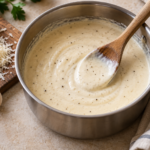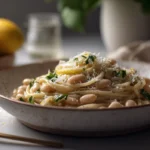
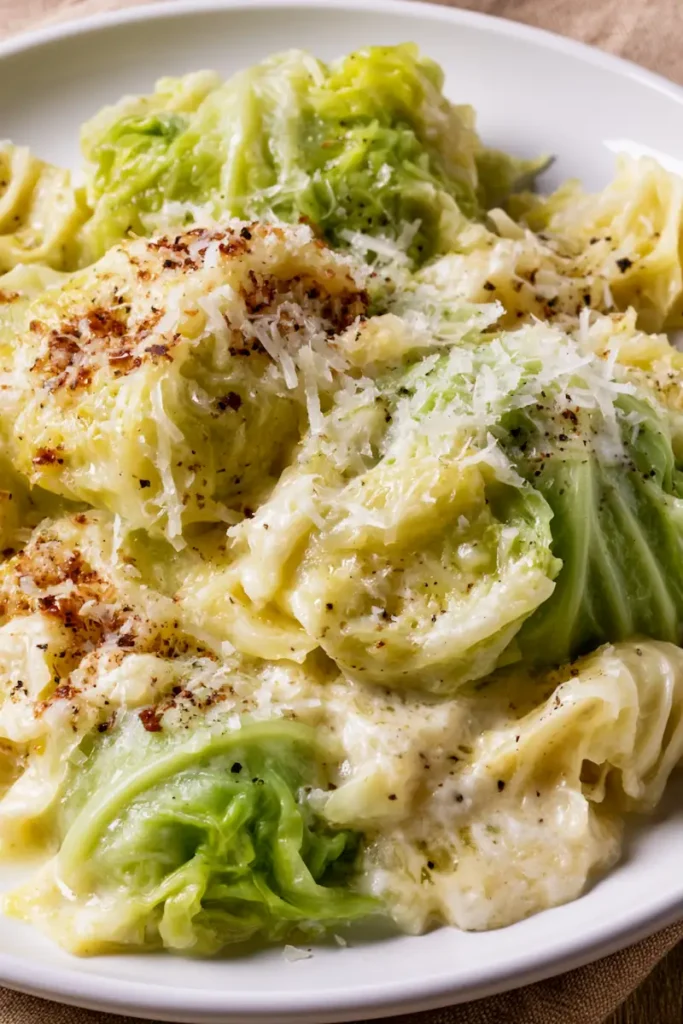
This cabbage Alfredo uses tender strips of cabbage in place of pasta, with a Parmesan cream sauce that clings to the vegetables. The cabbage needs to soften without releasing so much water that the sauce becomes thin.
I cook the cabbage uncovered until its excess moisture has evaporated, then lower the heat before adding the dairy. Parmesan is added gradually so it melts smoothly instead of forming clumps.
Recipe Info
| Details | Time |
|---|---|
| Prep Time | 10 minutes |
| Cook Time | 20 minutes |
| Active Time | 25 minutes |
| Total Time | 30 minutes |
| Servings | 4 servings |
Why This Cabbage Alfredo Recipe Recipe Works
This cabbage alfredo feels cozy and comforting while using simple ingredients you may already have in your kitchen.
The tender cabbage soaks up the creamy Parmesan sauce beautifully, creating a dish that feels rich without needing much effort.
It’s a peaceful weeknight recipe that comes together quickly and brings a little warmth to the dinner table.
Recipe Summary
Cabbage alfredo is a simple dish made by cooking thinly sliced cabbage until tender, then coating it in a creamy Alfredo-style sauce made with butter, garlic, cream, and Parmesan cheese.
The cabbage replaces traditional pasta noodles, creating a lighter but still comforting meal. You can enjoy it on its own or pair it with your favorite protein for a more filling dinner.
Quick Answer
To make cabbage alfredo, sauté sliced cabbage until soft, prepare a creamy garlic Parmesan Alfredo sauce, then combine everything until the cabbage is coated in the rich sauce. Finish with extra Parmesan and black pepper for a simple, cozy dish.
Ingredients
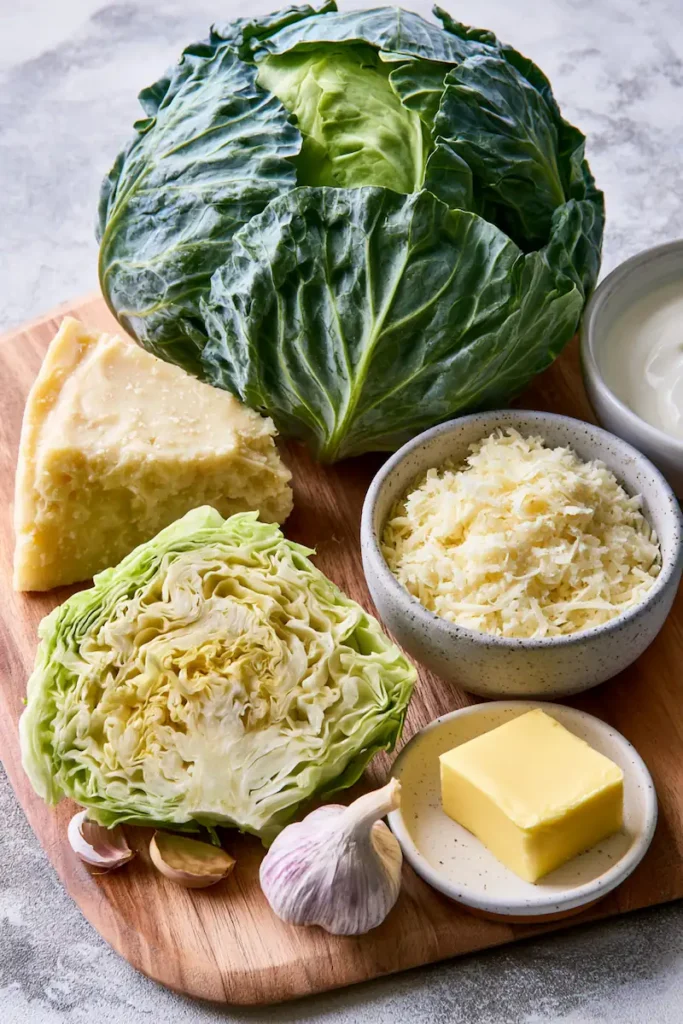
- 1 medium green cabbage, thinly sliced
Creates soft “noodle-like” pieces that hold the sauce well. - 3 tablespoons unsalted butter
- 3 cloves garlic, minced
Fresh garlic gives the sauce a deeper homemade flavor. - 1 cup heavy cream
- ¾ cup freshly grated Parmesan cheese
- ¼ cup cream cheese, softened
Adds extra smoothness and helps thicken the sauce. - ½ teaspoon salt, adjust to taste
- ½ teaspoon black pepper
- ¼ teaspoon Italian seasoning
- 1 tablespoon olive oil
- Fresh parsley for garnish (optional)
- Extra Parmesan for serving
Slice Cabbage Strips That Cook Like Tender Noodles
Begin by removing any tough outer leaves from the green cabbage. Cut the head into manageable pieces, remove the dense core and slice the leaves into strips of similar width. A few irregular pieces are fine, but a mixture of very thick chunks and thin shreds will not soften at the same pace. The goal is a tender vegetable base that can be tossed with sauce, rather than a chopped salad texture.
Separate tightly packed strips with your hands after cutting. This lets the oil and heat reach more of the cabbage in the skillet. If your pan is crowded, cook it in batches instead of forcing a mound to steam under itself. The recipe asks for lightly golden edges and a soft center, which are easier to achieve when the cabbage has contact with the pan and excess moisture can escape.
Add only the measured olive oil and a modest pinch of the listed salt at this stage. As the cabbage cooks, its volume shrinks, so heavy early seasoning can taste stronger in the finished dish than expected. Stir occasionally and watch the bottom of the pan. When the vegetable is tender and the pan is nearly dry, transfer it to a plate as the instructions direct.
For another cabbage dinner with a different sauce and format, try creamy vegan cabbage Alfredo bowls. Follow that recipe’s own ingredients if you want a dairy-free version; this Parmesan-and-cream recipe uses a separate method.
Step by Step
1. Prepare the cabbage
Remove any tough outer leaves from the cabbage. Slice the cabbage into thin strips, similar to wide noodles.
Try to keep the pieces close in size so they cook evenly.
2. Cook the cabbage
Warm olive oil in a large skillet over medium heat.
Add the sliced cabbage with a small pinch of salt. Cook for about 10–12 minutes, stirring occasionally, until the cabbage becomes tender and slightly golden around the edges.
Transfer the cabbage to a plate and set aside.
3. Make the Alfredo sauce
In the same skillet, melt the butter over medium-low heat.
Add the garlic and cook for about 30 seconds until fragrant.
Pour in the heavy cream and stir gently. Add the cream cheese and allow it to melt into the sauce.
4. Add Parmesan
Reduce the heat to low.
Stir in the Parmesan cheese slowly until the sauce becomes creamy and smooth.
Add black pepper and Italian seasoning.
5. Combine everything
Return the cooked cabbage to the skillet.
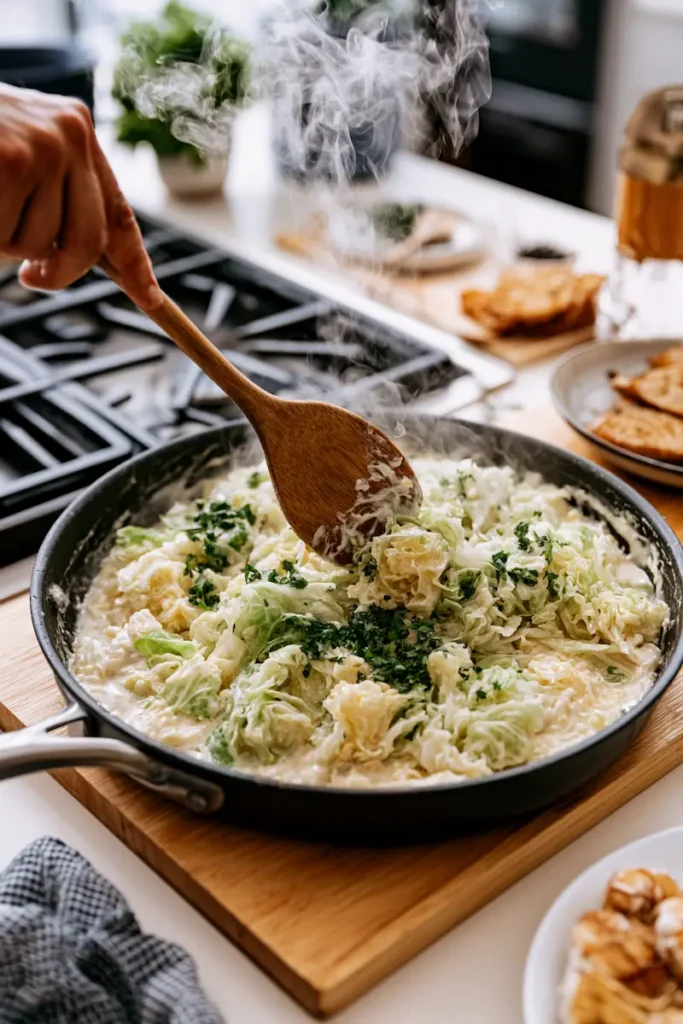
Gently toss everything together until the cabbage is covered in Alfredo sauce.
Let it warm together for 2–3 minutes so the flavors blend.
6. Serve warm
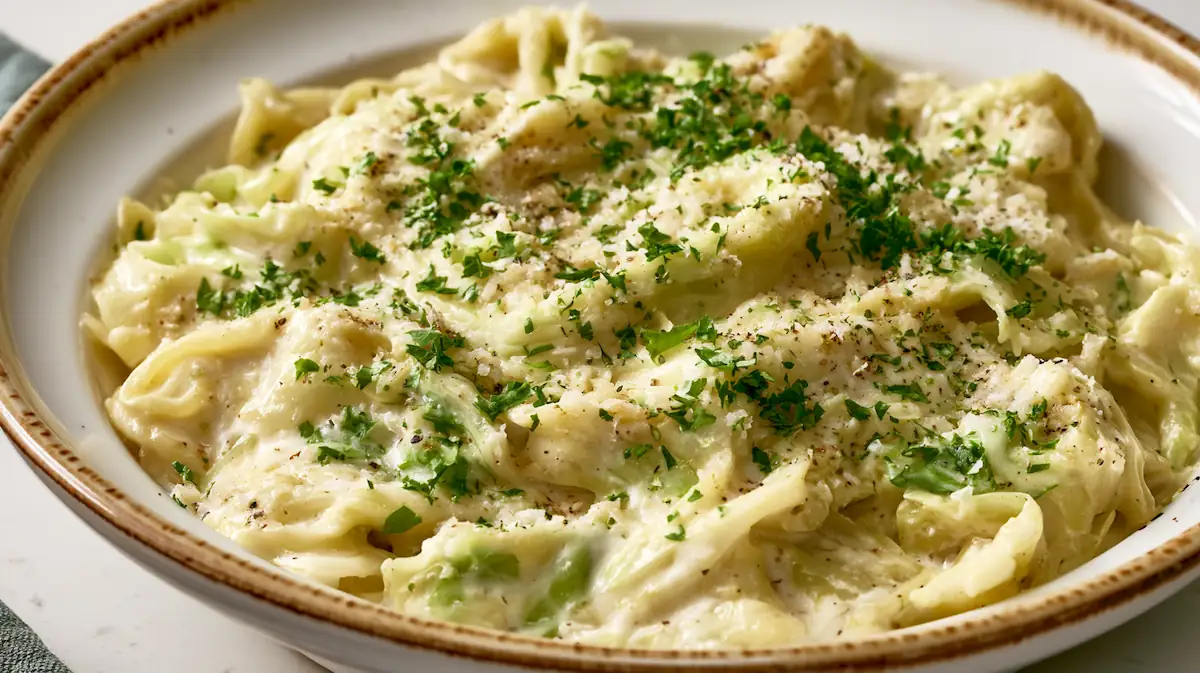
Top with extra Parmesan, fresh parsley, and a little more black pepper if desired.
Serve immediately while the sauce is creamy.
Keep the Parmesan Cream Sauce Smooth
Use the same skillet after removing the cooked cabbage, but lower the heat before starting the sauce. Melt the butter gently and cook the garlic only until fragrant. Garlic that browns too dark can make a delicate cream sauce taste harsh. Stir in the measured heavy cream and softened cream cheese until the mixture looks even before adding the Parmesan.
Grate the Parmesan shortly before cooking if possible. Add it gradually over low heat, stirring between additions so the cheese has a chance to melt into the warm cream. Dumping all the cheese into a hot, boiling pan can leave clumps or an oily appearance. If the sauce thickens too quickly, remove it briefly from the heat and stir. Avoid adding an unmeasured amount of liquid until you see how it coats the cabbage.
Once the sauce looks smooth, add pepper and Italian seasoning. Taste before increasing the salt, since Parmesan contributes seasoning. Return the cabbage and toss gently until the strips are coated. Let them warm together for the short interval in the instructions; a long, vigorous boil at this point can make the sauce less smooth and encourage the cabbage to release more liquid.
The guide to keeping cream sauce from splitting gives more troubleshooting advice for dairy sauces. Use it to identify whether a sauce needs gentle warming, a small adjustment in liquid or simply time off the heat.
Nutrition Table
Approximate nutrition per serving:
| Nutrient | Amount |
|---|---|
| Calories | 360 |
| Protein | 10g |
| Carbohydrates | 14g |
| Fat | 31g |
| Fiber | 5g |
| Sugar | 7g |
| Sodium | 520mg |
Nutrition values can vary depending on the exact ingredients and brands used. This recipe offers a creamy, satisfying meal with vegetables as the base while still keeping the classic Alfredo flavor.
Ingredient and Nutrition Notes for Cabbage Alfredo Recipe
Cabbage adds texture, fiber, and a naturally mild flavor that works well with creamy sauces.
Using cabbage instead of traditional pasta can be a nice option when you want more vegetables in your meal while still enjoying a cozy Alfredo-style dinner.
If you enjoy vegetable-based creamy dinners, you might also love these creamy vegan cabbage Alfredo bowls for another cozy way to turn simple cabbage into a comforting meal.
Choose a Main Dish That Complements Cabbage Alfredo
This recipe makes four servings of creamy cabbage. Serve it on its own if that suits the meal, or pair it with a simply seasoned protein so the Parmesan sauce remains the focus. The practical tips mention cooked chicken as one option. Add prepared chicken to the finished cabbage rather than asking raw chicken to cook in a gently warming cream sauce.
For a complete chicken recipe with a contrasting, brighter flavor, consider chili lime grilled chicken. Make the chicken by its own instructions and serve it beside the cabbage rather than mixing its marinade into the Alfredo. For a creamier chicken pairing, Boursin chicken is another full recipe, though two rich sauces on one plate may call for smaller portions and a fresh vegetable side.
Roasted vegetables can add a firmer texture. Frozen broccoli roasted without thawing is one option if fresh vegetables are not available. Follow its oven method separately; the cabbage Alfredo is a stovetop dish that should be served soon after the sauce and vegetable are combined.
Set out plates and garnish before the final toss. A small amount of parsley or extra Parmesan can finish individual portions, allowing guests to adjust each bowl. If the sauce becomes thick while waiting, warm it gently and follow the reheating guidance rather than turning up the heat sharply.
Mistakes to Avoid with Cabbage Alfredo Recipe
Overcooking the cabbage
Cooking cabbage too long can make it lose texture. Keep it tender but with a slight bite for the best result.
Using high heat for the sauce
Alfredo sauce is happiest over gentle heat. High temperatures can make the sauce separate.
Adding Parmesan too quickly
Sprinkle Parmesan in gradually and stir slowly to create a smoother sauce.
Skipping seasoning adjustments
Cabbage has a mild flavor, so taste before serving and adjust salt and pepper as needed.
Practical Tips for Cabbage Alfredo Recipe
Use freshly grated Parmesan instead of pre-shredded cheese for the creamiest sauce.
Slice the cabbage evenly so every piece cooks at the same speed.
For a thicker Alfredo sauce, let it simmer gently for an extra minute before adding the cabbage.
If reheating leftovers, warm slowly on the stove with a splash of cream or milk to refresh the sauce.
For extra flavor, add cooked chicken, mushrooms, or roasted vegetables.
If you love the rich Parmesan flavor of Alfredo sauce, this easy chicken Alfredo bake is another warm and creamy dinner idea worth saving.
The Finishing Touch I Add to Cabbage Alfredo
Just before serving, I add black pepper and a small handful of freshly grated Parmesan. That final seasoning brings the creamy sauce and tender cabbage together without making the dish feel too heavy.
Plan the Order of Work for a Thirty-Minute Dinner
The recipe’s stated total time is manageable when prep happens before the pan gets hot. Slice the cabbage, mince the garlic, grate the Parmesan and measure the cream and cream cheese first. Put a plate next to the stove for the cooked cabbage. This sequence lets you move directly from softening the vegetable to building the sauce without leaving garlic unattended in hot butter.
Cook the cabbage uncovered and assess the moisture in the pan before transferring it. If water still pools at the bottom, give it a little longer so the Alfredo will not be diluted. Do not use high heat simply to rush the process; a steady cook makes it easier to keep the cabbage tender and watch the edges.
While the cabbage cooks, you can prepare a simple side or set the table. Save the sauce-making for when you can stay at the skillet and stir, because its texture changes quickly after the cheese goes in. Once the cabbage returns to the pan, the dish only needs a brief warming period. Serve immediately for the best coating.
If you want a baked Alfredo dinner on another night, the chicken Alfredo bake follows a different, oven-based approach. Keeping these two methods distinct helps you choose the right dinner for the time and equipment you have.
FAQ
Can I make cabbage alfredo ahead of time?
Yes. Store it in an airtight container in the refrigerator for up to 3 days. Reheat gently to keep the sauce creamy.
Does cabbage really work instead of pasta?
Yes, thinly sliced cabbage becomes soft and noodle-like when cooked. It has its own flavor but pairs very well with Alfredo sauce.
Can I use store-bought Alfredo sauce?
Yes. Homemade sauce gives the freshest flavor, but a good-quality jarred Alfredo sauce works when you need a quicker meal.
What kind of cabbage is best?
Green cabbage works best because it becomes tender while still holding its shape. Savoy cabbage can also work for a softer texture.
Can I add protein to cabbage alfredo?
Absolutely. Chicken, shrimp, or other simple additions pair nicely with the creamy Parmesan sauce.
Final Thoughts on Cabbage Alfredo Recipe
The pan should look almost dry before the cream goes in. If water is still pooling under the cabbage, cook it a little longer or the finished Alfredo sauce will be diluted.
Serve the dish soon after adding the Parmesan. The sauce thickens as it cools, so loosen leftovers gently with a spoonful of milk or cream while reheating.
Creamy Cabbage Alfredo
Ingredients
Equipment
Method
- Remove tough outer cabbage leaves and slice the cabbage into thin noodle-like strips. Keep pieces similar in size for even cooking.
- Warm olive oil in a large skillet over medium heat. Add cabbage with a pinch of salt and cook for 10 to 12 minutes until tender and slightly golden. Transfer to a plate.
- Melt butter in the same skillet over medium-low heat. Add garlic and cook for 30 seconds. Pour in heavy cream, add cream cheese, and stir until melted.
- Reduce heat to low. Slowly stir in Parmesan cheese until smooth. Add black pepper and Italian seasoning.
- Return cabbage to the skillet and gently toss until fully coated with Alfredo sauce. Warm together for 2 to 3 minutes.
- Serve warm topped with extra Parmesan, parsley, and additional black pepper if desired.