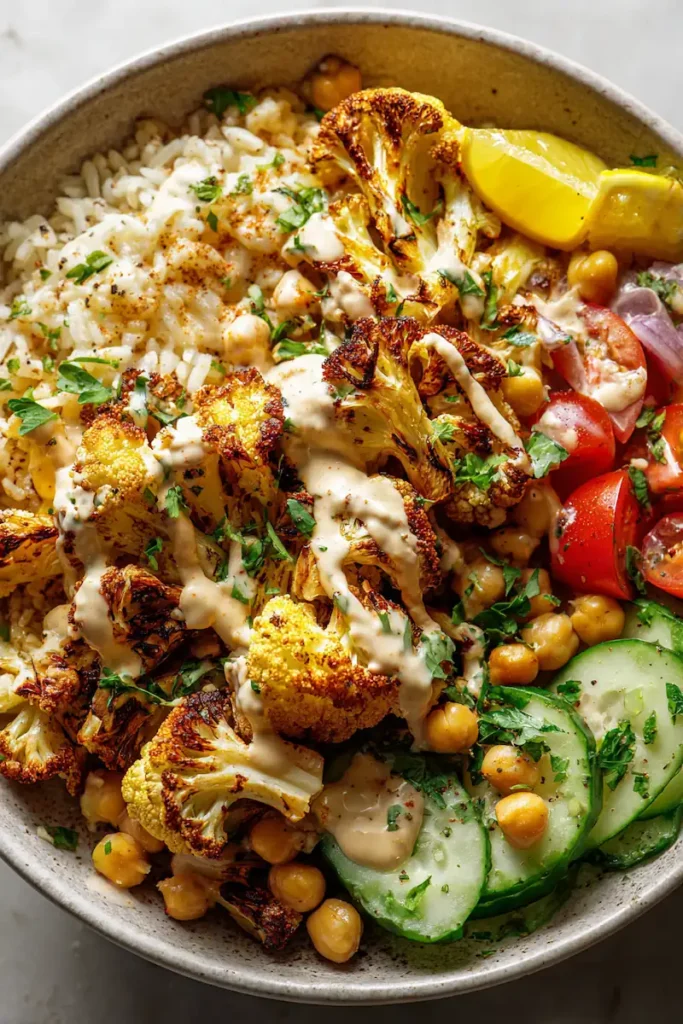
These cauliflower shawarma bowls combine spiced roasted cauliflower, grains, crisp vegetables, and a creamy sauce. I roast the cauliflower with space between the pieces so it browns instead of steaming.
Prepare the sauce and fresh toppings while the cauliflower cooks, then keep hot and cold components separate until serving for better texture.
Table of Contents
Recipe Info Table
| Detail | Time |
|---|---|
| Prep Time | 15 minutes |
| Cook Time | 25 minutes |
| Active Time | 20 minutes |
| Total Time | 40 minutes |
| Servings | 4 bowls |
Why This Cauliflower Shawarma Bowls Recipe Works
These bowls are full of warm shawarma spices without feeling heavy.
They are easy to customize with rice, quinoa, pita, chickpeas, or chicken.
They make a calm, colorful dinner that feels fresh, cozy, and satisfying.
Recipe Summary
Cauliflower shawarma bowls are made by tossing cauliflower florets with olive oil, lemon juice, and a cozy shawarma-style spice blend, then roasting them until tender and golden. The cauliflower is served over rice or quinoa with cucumbers, tomatoes, greens, chickpeas, and a creamy tahini yogurt sauce.
If you enjoy fresh bowl-style meals, these pair beautifully with the same bright feeling as Mediterranean Chickpea Salad Bowls, but with a warmer roasted vegetable base.
Ingredients Cauliflower Shawarma Bowls
For the Roasted Cauliflower
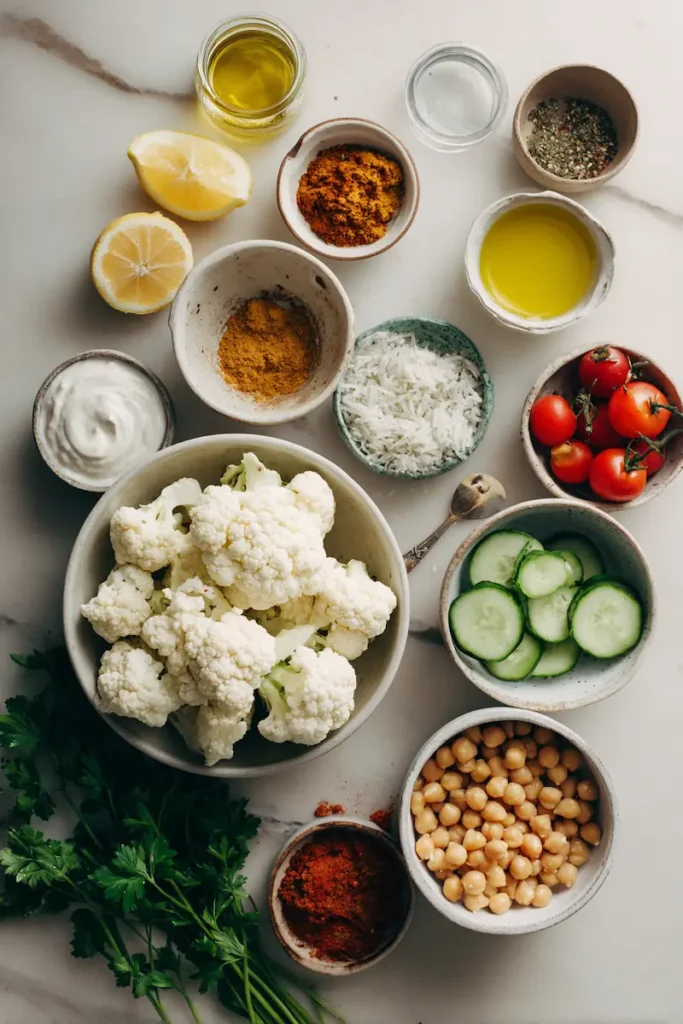
- 1 large head cauliflower, cut into florets
- 2 tablespoons olive oil
- 1 tablespoon lemon juice
- 1 teaspoon ground cumin
- 1 teaspoon smoked paprika
- 1 teaspoon ground coriander
- 1/2 teaspoon turmeric
- 1/2 teaspoon garlic powder
- 1/4 teaspoon cinnamon
- 1/2 teaspoon salt
- 1/4 teaspoon black pepper
For the Bowls
- 2 cups cooked rice, quinoa, or couscous
- 1 cup canned chickpeas, drained and rinsed
- 1 cup chopped cucumber
- 1 cup cherry tomatoes, halved
- 2 cups chopped romaine or baby spinach
- 1/4 cup chopped parsley
- 1/4 cup thinly sliced red onion
- Lemon wedges, for serving
For the Creamy Tahini Yogurt Sauce
- 1/2 cup plain Greek yogurt
- 2 tablespoons tahini
- 1 tablespoon lemon juice
- 1 small garlic clove, grated
- 1 to 2 tablespoons water, to thin
- 1/4 teaspoon salt
For a vegan version, use dairy-free yogurt or make the sauce with tahini, lemon, garlic, water, and salt only. Leftover roasted cauliflower also tastes lovely tucked into Vegan Hummus Veggie Wraps the next day.
Step by Step
1. Preheat the oven
Preheat your oven to 425°F. Line a large baking sheet with parchment paper so the cauliflower can roast without sticking.
2. Season the cauliflower
In a large bowl, toss the cauliflower florets with olive oil, lemon juice, cumin, smoked paprika, coriander, turmeric, garlic powder, cinnamon, salt, and black pepper. Coat the cauliflower well so every piece gets a soft layer of spice.
3. Roast until golden
Spread the cauliflower on the baking sheet in a single layer. Roast for 22 to 25 minutes, flipping once halfway through, until the edges are golden and the centers are tender.
4. Make the sauce
In a small bowl, whisk together Greek yogurt, tahini, lemon juice, garlic, salt, and enough water to make the sauce creamy and pourable. Taste and adjust with more lemon or salt if needed.
5. Build the bowls
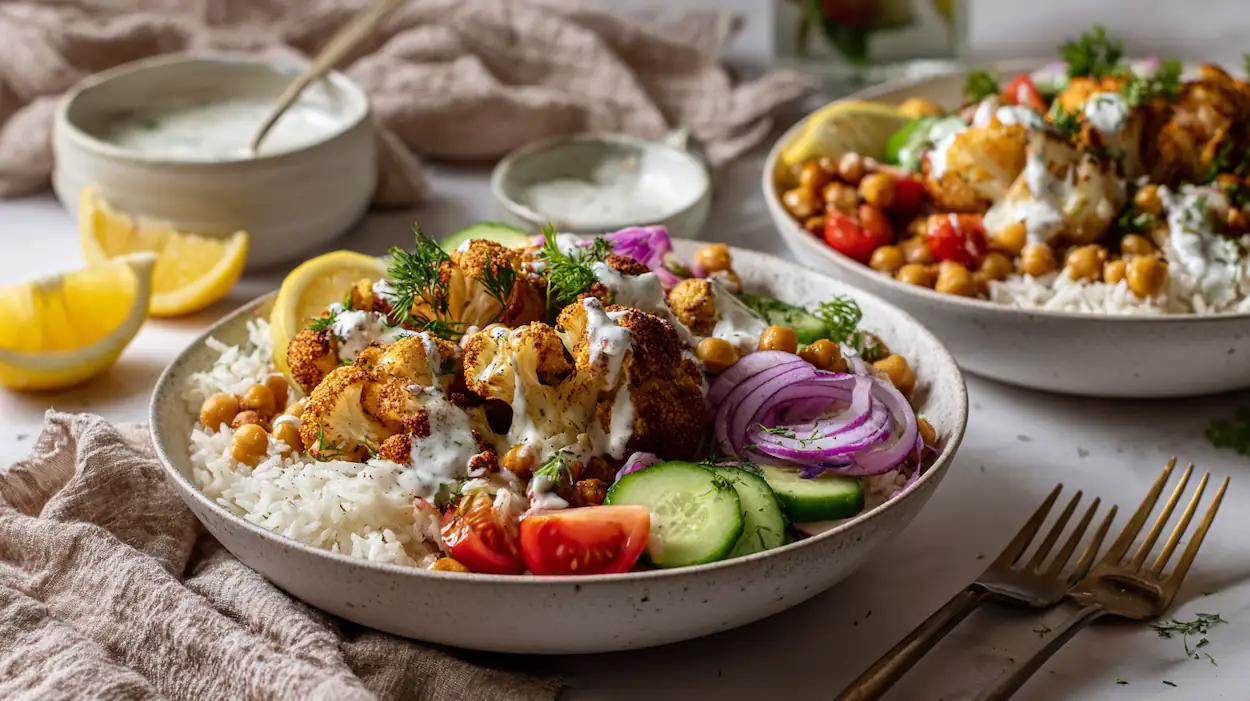
Add rice, quinoa, or couscous to each bowl. Top with roasted cauliflower, chickpeas, cucumber, tomatoes, greens, parsley, and red onion.
6. Finish and serve
Drizzle with the tahini yogurt sauce and serve with lemon wedges. Add a little extra parsley or black pepper for a fresh, simple finish.
Cauliflower Shawarma Bowls
Ingredients
Equipment
Method
- Preheat your oven to 425°F. Line a large baking sheet with parchment paper so the cauliflower can roast without sticking.
- In a large bowl, toss the cauliflower florets with olive oil, lemon juice, cumin, smoked paprika, coriander, turmeric, garlic powder, cinnamon, salt, and black pepper. Coat the cauliflower well so every piece gets a soft layer of spice.
- Spread the cauliflower on the baking sheet in a single layer. Roast for 22 to 25 minutes, flipping once halfway through, until the edges are golden and the centers are tender.
- In a small bowl, whisk together Greek yogurt, tahini, lemon juice, garlic, salt, and enough water to make the sauce creamy and pourable. Taste and adjust with more lemon or salt if needed.
- Add rice, quinoa, or couscous to each bowl. Top with roasted cauliflower, chickpeas, cucumber, tomatoes, greens, parsley, and red onion.
- Drizzle with the tahini yogurt sauce and serve with lemon wedges. Add a little extra parsley or black pepper for a fresh, simple finish.
Notes
Nutrition Table
Approximate nutrition per serving:
| Nutrition | Amount |
|---|---|
| Calories | 385 |
| Protein | 14g |
| Carbs | 52g |
| Fat | 15g |
| Fiber | 10g |
| Sugar | 8g |
| Sodium | 520mg |
These numbers are estimates and will vary depending on the grain, yogurt, and toppings you use. For more protein, add extra chickpeas, lentils, grilled chicken, or a spoonful of hummus.
Ingredient and Nutrition Notes for Cauliflower Shawarma Bowls
This bowl brings together fiber-rich cauliflower, chickpeas, fresh vegetables, and a creamy sauce for a balanced vegetarian dinner. It feels comforting because of the warm spices, but still bright and fresh from the lemon, herbs, and crunchy vegetables.
If you love cozy plant-based dinners, you may also enjoy Creamy Coconut Chickpea Curry for another warm, soft, satisfying meal.
Mistakes to Avoid with Cauliflower Shawarma Bowls
Crowding the pan
If the cauliflower is too crowded, it will steam instead of roast. Use a large baking sheet and leave a little space between the florets.
Cutting the cauliflower too large
Large florets take longer to cook and may not get as golden. Medium bite-size pieces work best.
Skipping the lemon
Lemon juice brightens the spices and keeps the bowl from tasting too heavy.
Making the sauce too thick
Add water one tablespoon at a time until the sauce is smooth enough to drizzle.
Practical Tips for Cauliflower Shawarma Bowls
For crispier cauliflower, roast it on the lower rack for the first half of cooking, then move it to the middle rack to finish.
For a more filling dinner, add extra chickpeas, grilled chicken, lentils, or a soft-boiled egg. Readers who want a chicken-based bowl can try this Healthy Chicken Rice Bowl for another cozy weeknight option.
For a stronger shawarma flavor, let the cauliflower sit with the oil, lemon, and spices for 10 minutes before roasting.
Storage Tips
Store the roasted cauliflower, grains, vegetables, and sauce separately if possible. The cauliflower and grains will keep well in airtight containers in the refrigerator for up to 4 days.
Reheat the cauliflower and grains in the microwave or a skillet, then add the fresh vegetables and sauce after warming. This keeps the bowl from becoming soggy.
What to Serve With It
These cauliflower shawarma bowls are filling on their own, but they pair beautifully with warm pita, hummus, or a bright Marinated Veggie Salad. The cool vegetables are a lovely contrast to the golden roasted cauliflower and warm shawarma spices.
You can also serve the bowls with olives, feta, pickled onions, or a small scoop of hummus for a fuller Mediterranean-style dinner.
How I Build My Favorite Shawarma Bowl
I start with the warm cauliflower, then add something cool, something crunchy, and a generous spoonful of sauce. Keeping those textures separate until serving makes every bite more interesting.
Cut and Roast Cauliflower for Golden Shawarma Edges
The cauliflower is the warm center of these bowls, so cut it with roasting in mind. Divide the head into medium florets that are fairly similar in size. Tiny crumbs can burn before the larger pieces become tender, while very large florets may stay pale in the middle. Dry the pieces after washing so the oil and spices coat them rather than sliding off on surface water. Toss the cauliflower with the measured olive oil, lemon juice, cumin, smoked paprika, coriander, turmeric, garlic powder, cinnamon, salt, and pepper until the seasoning is distributed.
Use the large lined baking sheet called for in the recipe and spread the pieces in one layer. Leave a little space between florets; when they touch on every side, steam is trapped and golden edges are harder to achieve. If the tray is crowded, use two sheets rather than piling the cauliflower high. Roast at 425°F for the recipe’s 22 to 25 minutes, turning once halfway through. Check the smaller pieces near the end and move them off the tray if they are darkening too quickly while the larger ones finish.
The goal is a tender center with browned points and a warm spice aroma, not a uniformly dark surface. If you want to compare a different vegetable roasting method, roasted frozen broccoli explains how spacing and moisture affect browning. Follow this cauliflower recipe’s own temperature and seasonings, but carry over the same habit of giving vegetables room. Add the roasted cauliflower to the bowls shortly before serving so it stays warm against the cool toppings.
Make a Pourable Tahini Yogurt Sauce
The sauce brings together plain Greek yogurt, tahini, lemon juice, garlic, salt, and a little water. Stir the thick ingredients first so the tahini is evenly dispersed, then add water one tablespoon at a time until the mixture drizzles from a spoon. Pouring all the water in at once can make a thin sauce that runs to the bottom of the bowl. Taste after it is smooth: the lemon should brighten the tahini, while the salt should support the spices on the cauliflower rather than dominate them.
For a dairy-free version, use a yogurt that suits your diet or follow the recipe’s tahini-only variation. These are different sauces, so add water gradually in either case and judge the texture as you go. If the tahini is very thick at the bottom of its jar, stir it before measuring so you do not use mostly oil or mostly paste. Prepare the sauce while the cauliflower roasts, then keep it cool until the bowls are ready. Do not warm the yogurt sauce with the grain or vegetables; the cool contrast is part of the appeal.
A little sauce goes a long way when the bowl also contains juicy tomatoes and lemon wedges. Start with a small drizzle, toss a few bites, then add more if needed. If you want another creamy plant-based dinner with a different flavor, creamy coconut chickpea curry offers a warm sauce approach. The shawarma bowl uses a cooler lemon-tahini finish, so keep the two methods distinct rather than adding coconut milk to this yogurt mixture.
Layer Warm and Cool Ingredients for a Balanced Bowl
Begin with cooked rice, quinoa, or couscous, then arrange the hot roasted cauliflower and chickpeas over the grain. Add cucumber, tomatoes, greens, parsley, and thinly sliced red onion after the warm ingredients are in place. This order prevents delicate greens from being heated while you are still assembling the bowls. It also lets everyone see and choose the mix of vegetables they want. A lemon wedge at the edge of the bowl gives diners control over the final brightness.
Choose one grain and prepare it according to its own package directions so it is ready when the cauliflower comes out of the oven. Quinoa brings a slightly firmer texture, rice makes a softer base, and couscous is quick to fluff. The recipe’s nutrition estimate will vary with that choice and with the amount of sauce used. If you want a bowl that begins with a cool chickpea salad rather than roasted cauliflower, see the Mediterranean chickpea salad bowls. Both use vegetables and chickpeas, but the contrast of warm shawarma-spiced cauliflower is the point of this version.
For extra crunch, keep cucumber and onion separate until serving. For a fuller vegetarian meal, use the listed cup of chickpeas across the four bowls and consider an additional spoonful if desired. If you add chicken, prepare it separately to its own safe endpoint rather than relying on the residual heat of the grains. The chicken rice bowl with avocado and broccoli is another complete bowl format if chicken is the main ingredient you want.
Pack Shawarma Bowls for Lunch Without Soggy Greens
These bowls lend themselves to meal prep when you divide the components instead of assembling every serving in advance. Store the roasted cauliflower and cooked grain in covered containers. Keep the cucumber, tomatoes, greens, herbs, and sauce separate so they do not sit against hot or moist ingredients for hours. At lunch, reheat only the cauliflower and grain, then add the cool vegetables and drizzle the sauce. This gives the second serving the same warm-and-cool contrast as the first dinner.
If you know you will use leftovers in a wrap, reserve some roasted cauliflower before saucing the bowls. It can be tucked into a pita or tortilla with greens and a spoonful of the chilled sauce. The vegan hummus veggie wraps provide another vegetable-forward lunch format; follow that recipe’s own filling if you want its exact flavor. A bowl and a wrap use many of the same components, but packing them separately gives you more flexibility the next day.
For serving a group, put the grain, cauliflower, vegetables, and sauce in separate dishes so each person can build a bowl. This also accommodates someone who wants extra chickpeas or fewer onions without changing the whole recipe. The marinated veggie salad can be a separate side if you want additional vegetables. Keep its dressing apart from the shawarma sauce until serving so the bowl does not become overly wet. The practical aim is to preserve each texture while making the meal easy to repeat.
FAQ
Can I make cauliflower shawarma bowls vegan?
Yes. Use dairy-free yogurt in the sauce, or make a simple tahini sauce with tahini, lemon juice, garlic, water, and salt.
Can I use frozen cauliflower?
Yes, but fresh cauliflower roasts better. If using frozen cauliflower, roast it straight from frozen and give it extra time so the edges can brown.
What grain works best for these bowls?
Rice, quinoa, couscous, or farro all work well. Rice gives the bowl a soft, comforting base, while quinoa adds more texture and protein.
Can I add chicken?
Yes. Grilled or roasted chicken works beautifully with the shawarma spices and turns this into a heartier dinner bowl.
How do I keep the bowls fresh for meal prep?
Store the warm ingredients, fresh vegetables, and sauce separately. Assemble just before eating for the best texture.
Final Thoughts on Cauliflower Shawarma Bowls
Use a large tray and turn the cauliflower once during roasting. Dark edges add flavor, but small pieces should be removed early if they begin to burn.
For meal prep, store grains and cauliflower together, but keep vegetables and sauce separate. Reheat only the warm components before assembling.